



● Off-Road Autonomy Chassis
LUCHS B
BUILT FOR AUTONOMY.
FROM THE WHEELS UP.
Chassis by RJ Tech Limited / Autonomy by TerraAgent Robotics (TAR)
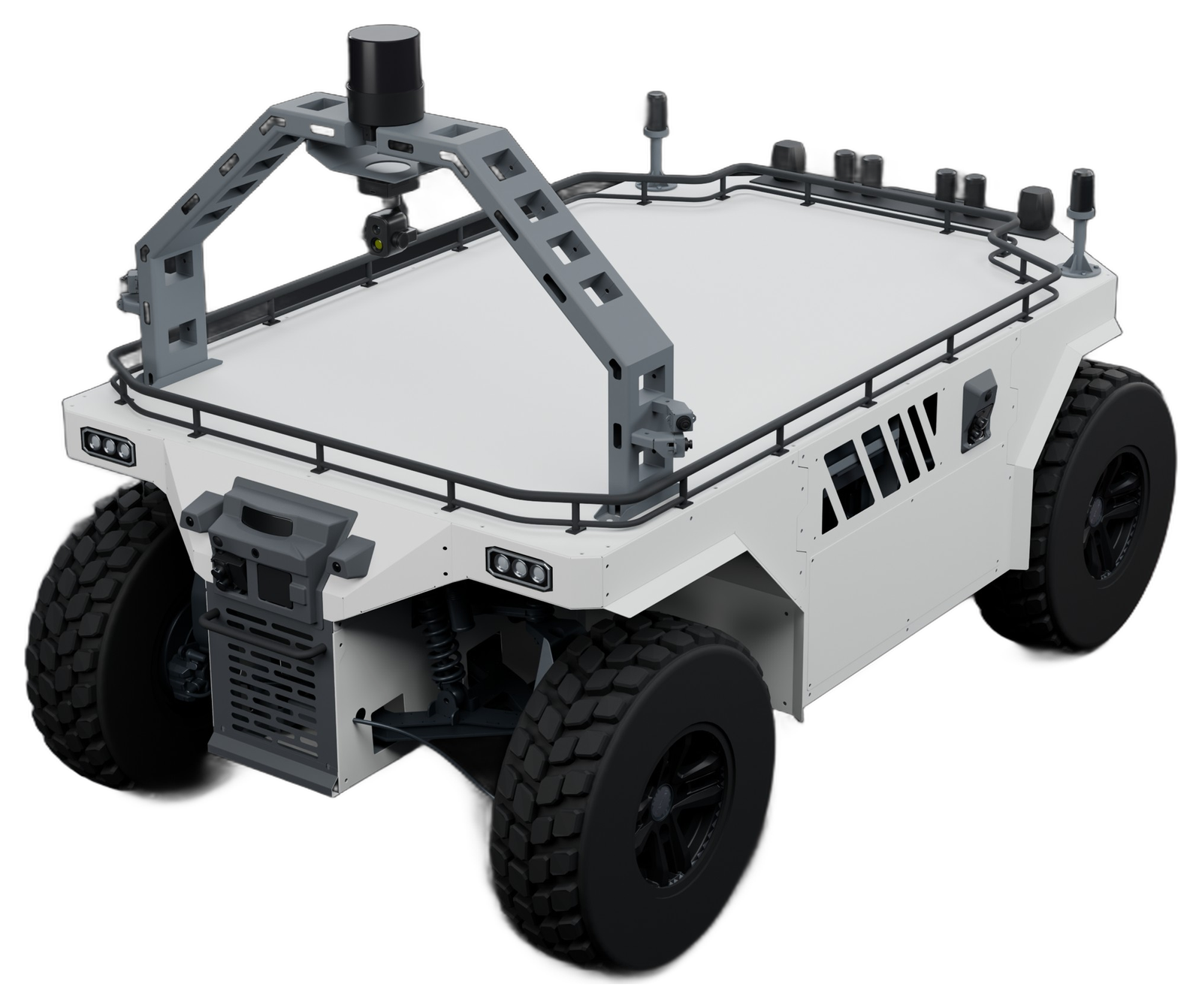
A Full-Size Off-Road Base, Built For Autonomy From The Wheels Up.
Luchs B carries up to 250 kg across dirt, gravel and slopes, and takes its commands from your computer, not a driver. Four in-wheel motors, steering on both axles, an electro-hydraulic brake and an electric parking brake are all controlled through one documented interface. Mount your sensors and compute on the deck and spend your time on the autonomy, not the vehicle. Luchs B is a civilian platform, made for inspection work in forests, grassland, farmland and desert.
Steers like a car, turns tighter than one. Two EPS units steer the front and rear axles. Choose single (front) or dual Ackermann in software.
Four in-wheel motors. 1.8 kW rated and 5 kW peak at every wheel, 20 kW for the vehicle. 4WD or 2WD, selectable.
Goes the distance. Battery for a working shift. Desert mode adds a second battery pack and a 1.5 kW range extender inside the chassis, for up to 300 km.
One interface for the whole family. The Luchs Chassis Interface (LCI) runs over CAN with the same messages as Luchs A, so the same driver and the same code drive both. Available with the LCI firmware.
Two ways to buy. Take Luchs B Junior, the bare drive-by-wire chassis, and run your own autonomy stack on it, or take Luchs B as a complete autonomous vehicle with the TAR sensor kit and software already integrated. Same frame, same interface: you choose how much we deliver. Lead time: Luchs B Junior 3 weeks, Luchs B with gantry 6 weeks.
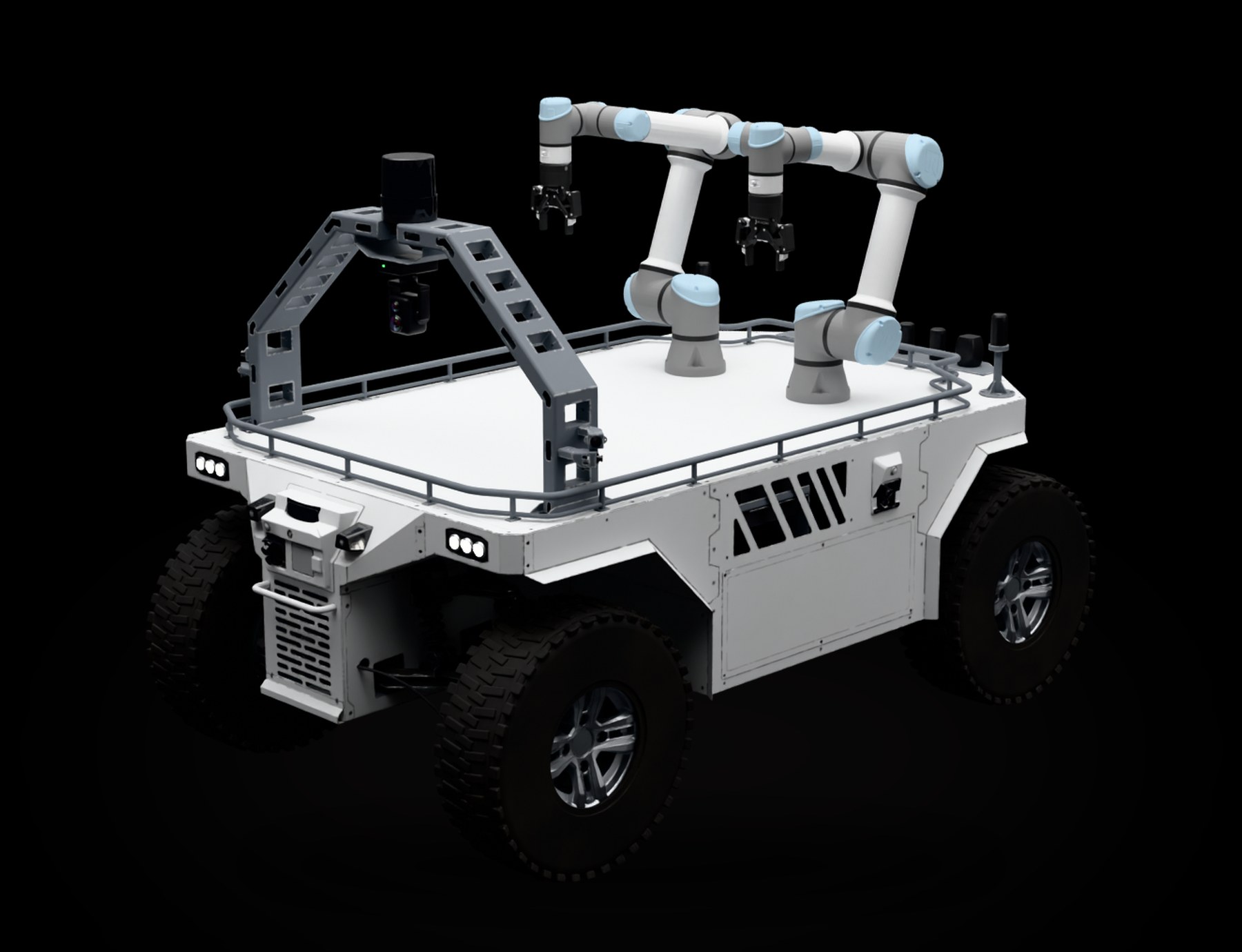
From Finding a Fault to Fixing It.
Today a Luchs B drives the pipeline, finds a fault and reports it. Fixing it still means sending someone out. This research build carries two collaborative arms with grippers on the deck, so the vehicle that finds the fault can start dealing with it.
1. Patrol. The vehicle follows the planned route along the pipeline, day and night.
2. Detect. Cameras and LiDAR flag leaks, corrosion, loose flanges or damaged coatings and log the position.
3. Reach. It stops beside the fault. One arm steadies, the other works.
4. Act. Tighten a bolt, turn a valve, clean a sensor, take a sample.
5. Report. Photos from before and after, with position, go back to the control station.
Why arms on an off-road base. Most faults on a pipeline are small, yet each one sends a vehicle and a crew over difficult ground. Luchs B already carries the power, the compute and the sensors that find the fault. Arms let finding and fixing happen on one trip. Two arms, because real jobs need one hand to hold and one to work.
Research build. Field results expected in 2027.
Luchs B Chassis Features
Drive, steering, braking and payload hardware

Drive-by-Wire Control
Send a target speed with a yaw rate or road-wheel angles. The chassis closes the speed, steering and brake loops, enforces its own limits and reports them to your planner. Live limits are available with the LCI firmware.

Independent Suspension
Independent suspension at every corner provides 50 mm of travel for off-road work.

Four In-Wheel Motors
Each wheel has its own motor, rated at 1.8 kW with 5 kW peak power and 330 N·m peak torque. Total peak power is 20 kW.

Payload Deck
A flat deck over a welded frame carries sensor masts, compute boxes and cargo. Working payload is 125 kg, with a maximum of 250 kg.

Battery and Diagnostics
LiFePO₄ battery packs are protected by battery management. Power-on self-test and continuous diagnostics monitor the battery, motor controllers, steering and brakes. Faults are reported over the interface.

Professional Off-Road Tires
22×7-10 in off-road tyres and 300 mm of ground clearance support travel across dirt, gravel and rough ground.
Steering On Both Axles. Drive At Every Wheel.
Your planner chooses the motion model with a single command, and the reported odometry follows the model you selected.
Creep mode gives steady very-low-speed travel on rough ground, slopes, mud, sand and rock.
Ackermann
Front axle steers, rear axle stays straight. Predictable, car-like arcs at speed.
Up to 40 km/h
Dual Ackermann
Front and rear axles steer in opposite directions for a much tighter turn.
Turning circle 4.4 m
4WD
All four in-wheel motors drive. Maximum traction for slopes, mud and loose ground.
Default off-road
2WD
Two motors drive for efficient running on firm surfaces.
Skid-steer
Left and right wheels driven at different speeds to turn on the spot.
On request
Choose How Far It Needs To Go.
Every Luchs B shares the same frame, drivetrain, steering, brakes and interfaces. One battery pack or two: the number of packs sets the range. Desert mode adds a built-in range extender and goes furthest.
Luchs B Standard
One battery pack
Desert mode
Two batteries plus a built-in range extender
All configurations have four in-wheel motors, dual EPS, an electro-hydraulic brake, an electric parking brake, 125 kg working payload and 250 kg maximum payload. In desert mode, the range extender and fuel count against the payload.
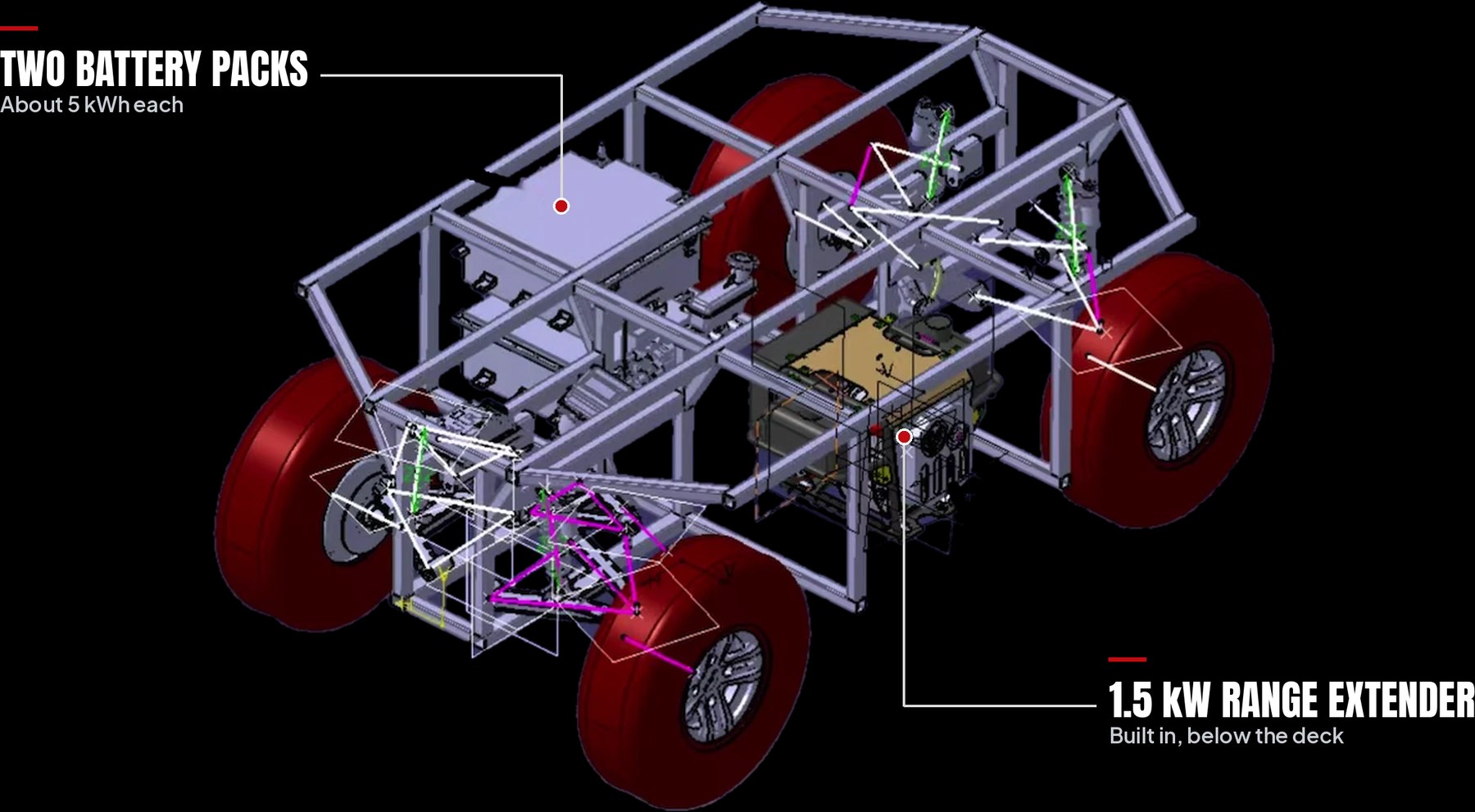
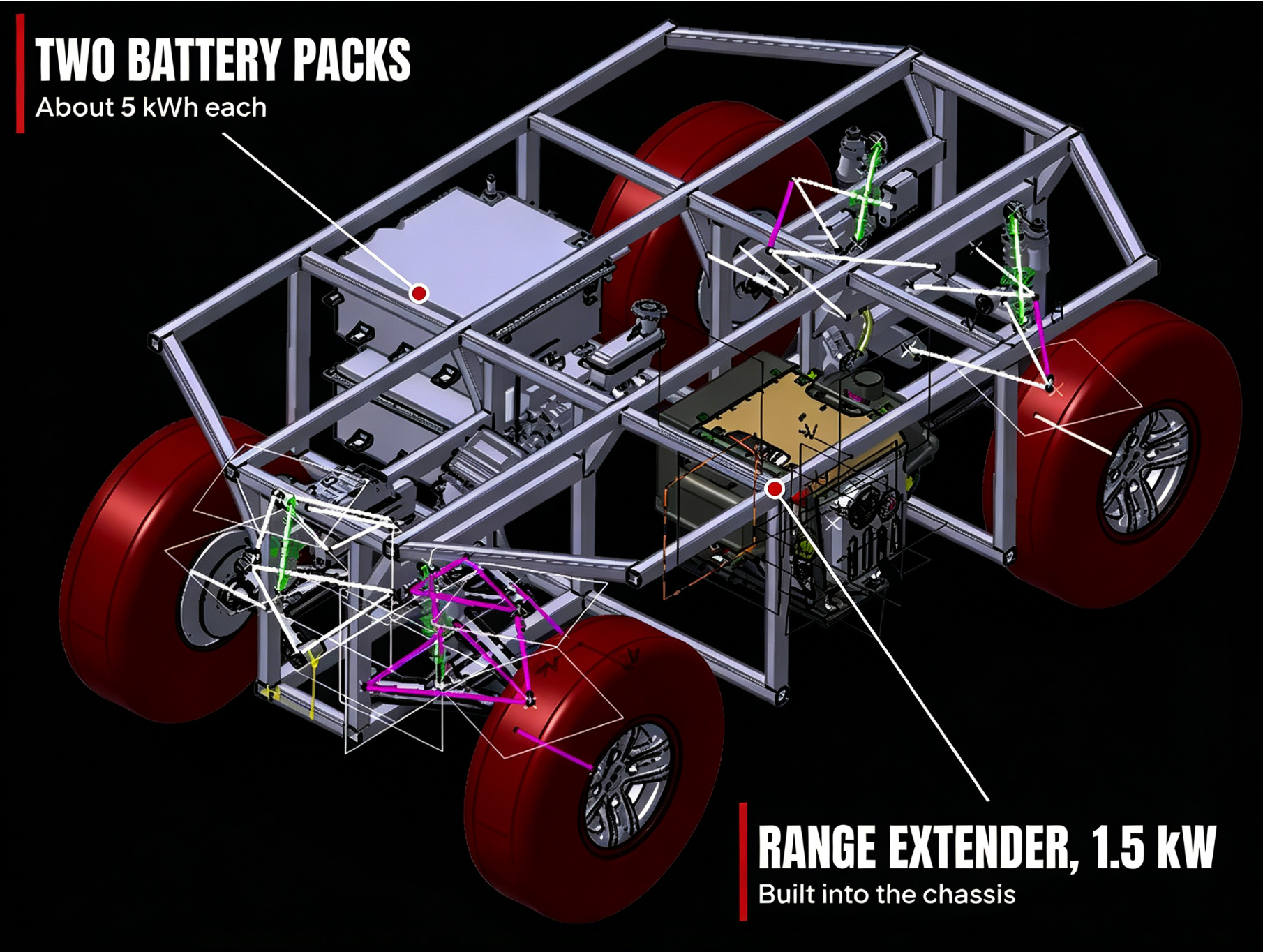
Two Battery Packs And A Range Extender. Up To 300 km.
Desert mode is the long-range build of Luchs B. It carries two LiFePO4 battery packs of about 5 kWh each, around 10 kWh on board, plus a 1.5 kW petrol range extender built into the chassis below the deck. The range extender makes electricity; it does not drive the wheels.
No charging station needed. The range extender recharges the packs on the move, so remote sites need no charging infrastructure. The wheels are always driven electrically: quiet, smooth and low on vibration, with all the benefits of an electric vehicle. That suits long inspection rounds in forest, grassland, farmland and desert.
Battery first, fuel for distance. On battery alone Luchs B covers 60 km or more at full load. With the range extender running, desert mode reaches up to 300 km.
Built in, deck stays free. Both packs and the range extender sit inside the frame, so the deck stays free for sensors and payload. In desert mode the range extender and fuel count against the 250 kg maximum payload.
Same chassis, same interface. Desert mode shares the frame, drivetrain, steering, brakes and LCI interface with Standard and Pro. Charge the packs with the on-board charger in about 3 h, or swap a pack in under 3 minutes.
The Autonomy Is Ours. Built By TAR, On Luchs B.
RJ Tech builds the chassis. TerraAgent Robotics (TAR) builds what drives it: the sensor kit, positioning, perception, planning, vehicle control and the control station, integrated on Luchs B and delivered as one system. The building blocks already run on real vehicles, on real data. Only need the chassis? RJ Tech supplies Luchs B on its own, with the documented LCI interface, for teams that run their own stack.
Core functions come with the TAR autonomy kit. Advanced functions are added for pilot and fleet operation. The chassis does not require any of this: Luchs B is also sold bare, for teams that bring their own autonomy.
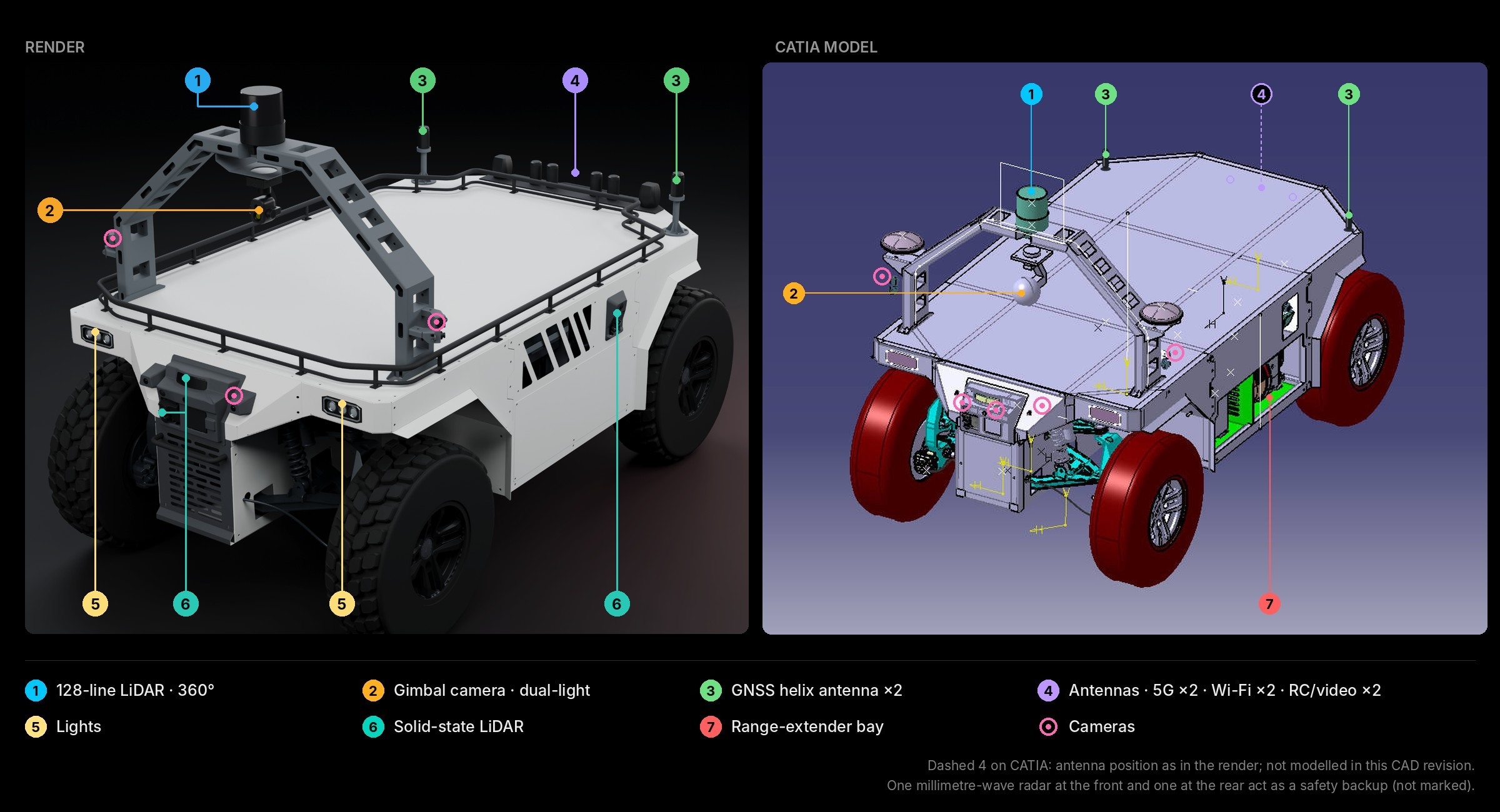
The sensor kit. A 128-line LiDAR on the mast, solid-state LiDARs and cameras on every side, a dual-light gimbal camera, dual GNSS antennas, and radar front and rear as a safety backup: 360° coverage for open terrain, where no single sensor is enough. This is the TAR autonomy build; Luchs B Junior ships as the bare chassis, with the deck free for your own kit.
CATIA model: frame and layout
The frame from the CATIA design model. Battery packs sit inside the frame, below the deck, so the deck stays free for sensors and payload.
CATIA model: top view
From above: a motor in every wheel and a deck kept clear for your equipment.
CATIA model: front corner
Independent suspension at every corner keeps all four wheels working on uneven ground.
CATIA model: opposite corner
One welded frame carries the deck, the payload and everything inside the chassis as a single structure.
CATIA model: side view
Wheelbase, deck height and side layout. 300 mm of ground clearance keeps the underbody clear of rocks and ruts.
CATIA model: other side
The opposite side and its in-chassis layout. A battery pack swaps in under 3 minutes, so a flat pack does not end the shift.
CATIA model: front view
Track width and front suspension, head-on. Two EPS units steer the front and rear axles, for a 4.4 m turning circle.
CATIA model: rear view
Rear suspension and frame from behind. The rear axle steers too, which is what tightens the turn in dual Ackermann.
CATIA model: other front corner
Each wheel has its own in-wheel motor with 330 N·m peak torque, so traction comes from all four corners.
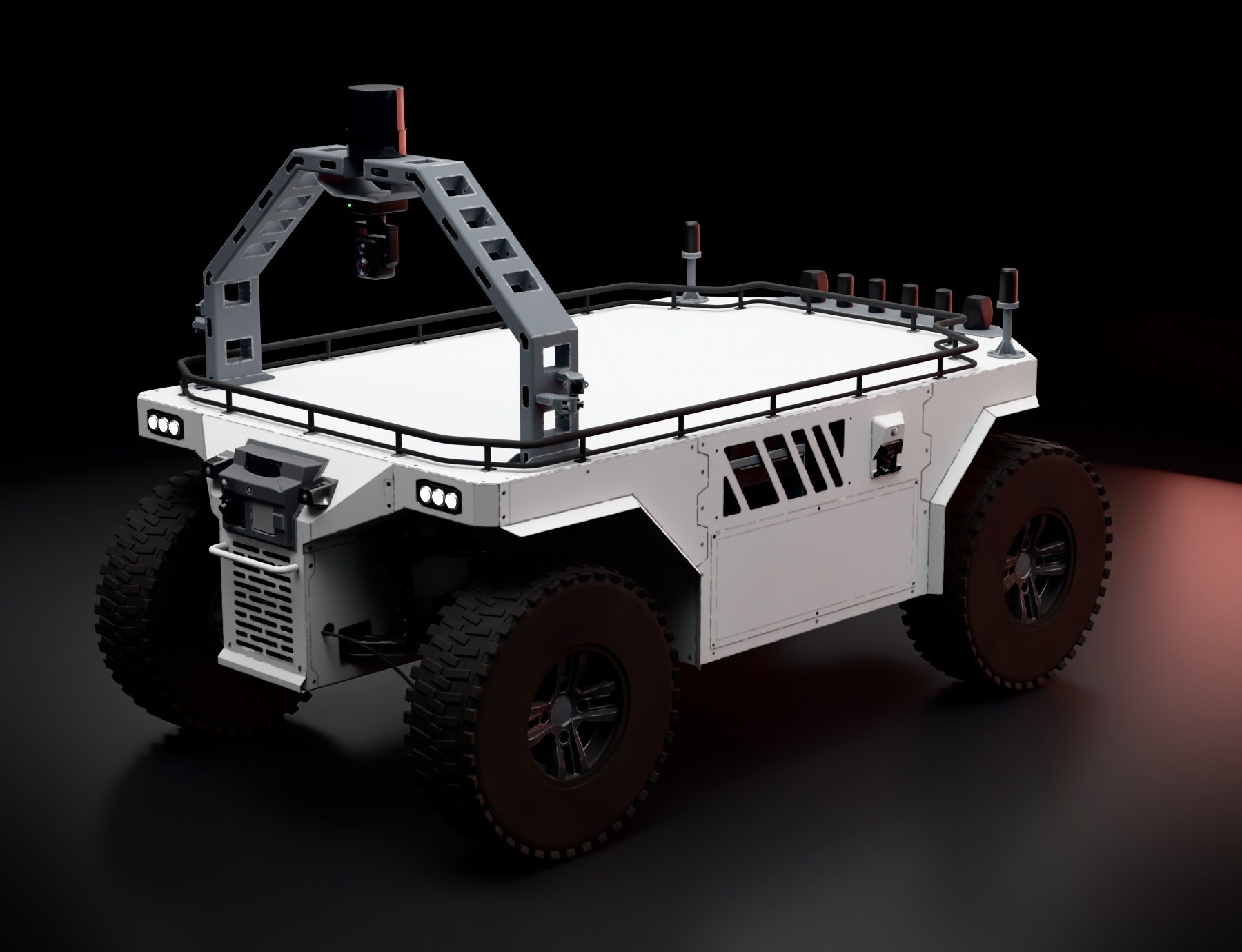
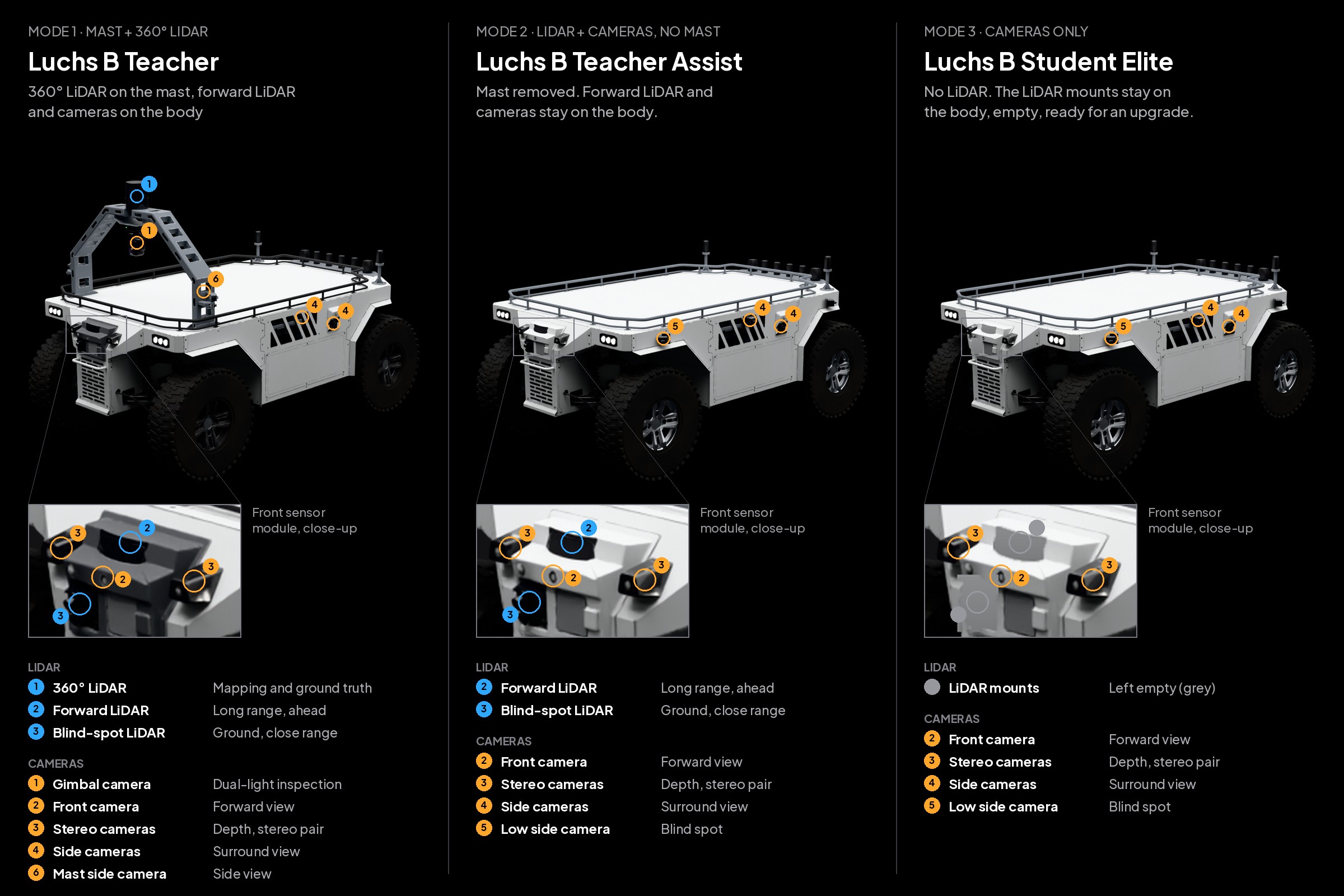
One Chassis, Three Sensor Modes.
Luchs B steps down from LiDAR to cameras only. One chassis comes in three sensor builds, from Luchs B Teacher to Luchs B Student Elite. In every build, one millimetre-wave radar at the front and one at the rear act as a safety backup. Sensor positions in the renders are indicative. The builds describe the TAR autonomy configuration; bought as a bare chassis, Luchs B leaves the deck free for your own sensors.
Luchs B Teacher. A 360° LiDAR and a dual-light gimbal camera on the mast, a forward LiDAR and cameras around the body, and dual GNSS antennas. This is the data-collection and ground-truth build.
LiDAR first, then vision. The Teacher's 360° LiDAR records the ground truth that trains and checks the camera models. As they are proven, the mast comes off.
Luchs B Teacher Assist. The mast is removed. The forward LiDAR and the cameras stay on the body.
Luchs B Student Elite. Cameras only, with dual-antenna GNSS, on the same frame, power and CAN interface. The LiDAR mounts stay in place, empty, ready for an upgrade.
Camera-first perception
Five cameras and LiDAR fused into one bird's-eye view with 3D detection, projected back into every camera.
Dense 3D reconstruction
Three front cameras build a coloured 3D model of the road as the vehicle drives. No LiDAR.
Reconstruction against low sun
The same reconstruction on a suburban road against the sun; the top view keeps the street shape through the turn.
Detection and occupancy on an expressway
Five cameras and LiDAR on a real vehicle: 3D boxes in every camera plus a semantic 3D occupancy grid of the road.
Junction and zebra crossing
The same fusion at a city junction: vehicles, small targets and the road surface in one occupancy grid.
Busy crosswalk, many pedestrians
Dense pedestrians and cyclists in town, and a box van behind, boxed and placed in the occupancy grid.
Drivable ground in snow
One camera, a 3D occupancy grid and a drivable-ground map (magenta) on a snow-covered forest track.
Dirt trail and verge
Follows a curving dirt track through the bends and tells the track from the verge (green).
Oncoming vehicle
A narrow lane along a fence: the space taken by the oncoming car is cut out of the drivable ground.
LiDAR map localisation
Each LiDAR scan registered to a prebuilt point-cloud map at 20 Hz: the second source of position when satellites drop out.
Planning around an obstacle
The planner leaves a blocked lane, passes the obstacle and returns to the lane on a smooth path.
Junctions, U-turns and parking
Route, behaviour and trajectory in three layers: turns at junctions, a U-turn and reversing into a bay.
Real-vehicle tiles show our own software running on real vehicles. Off-road tiles are our perception model run offline on recorded off-road driving data. Tiles marked training data show our fusion model running on data it was trained on. Planning tiles are replays of our planning stack. CATIA tiles are views of the chassis design model. All are building blocks we integrate on the Luchs family.
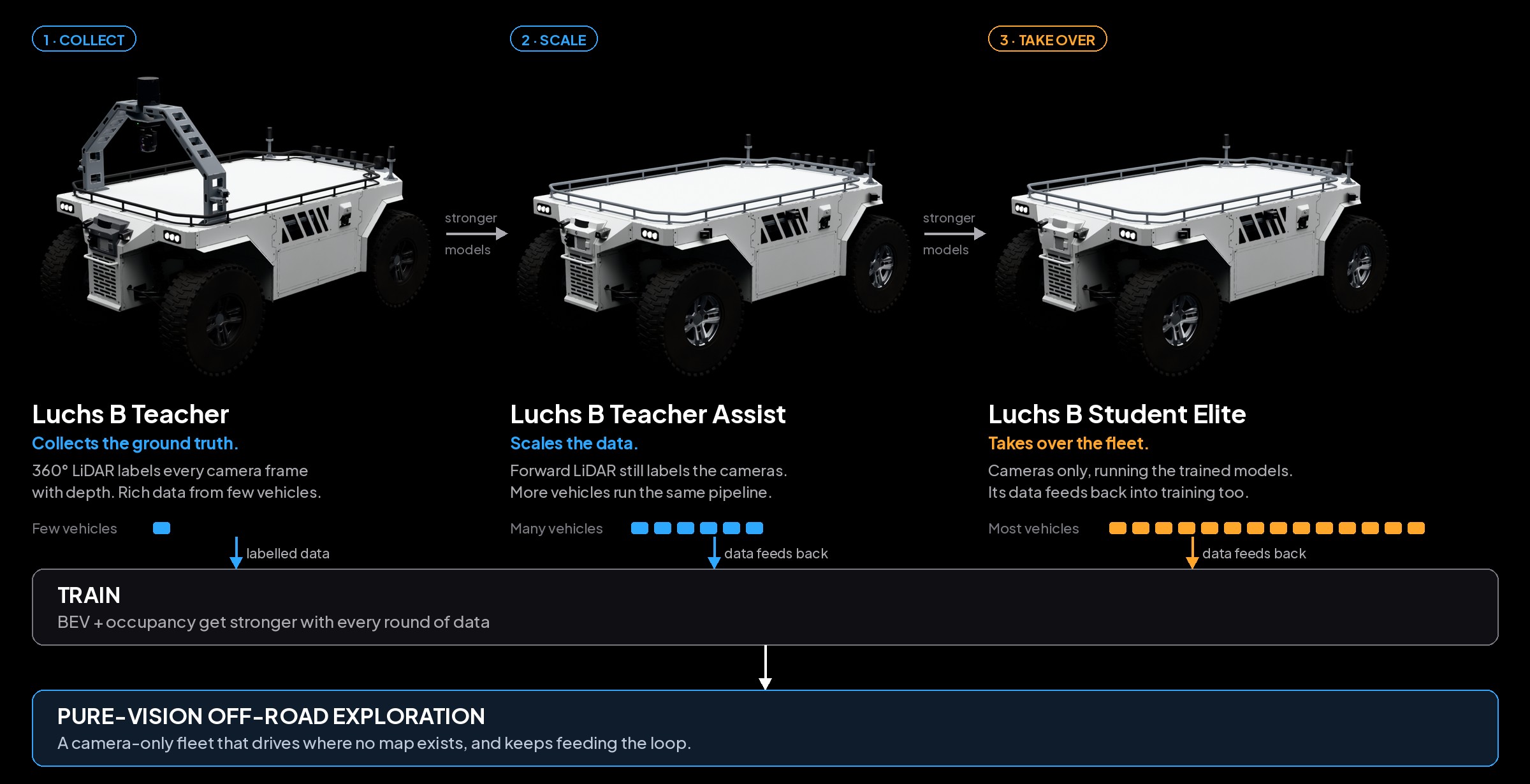
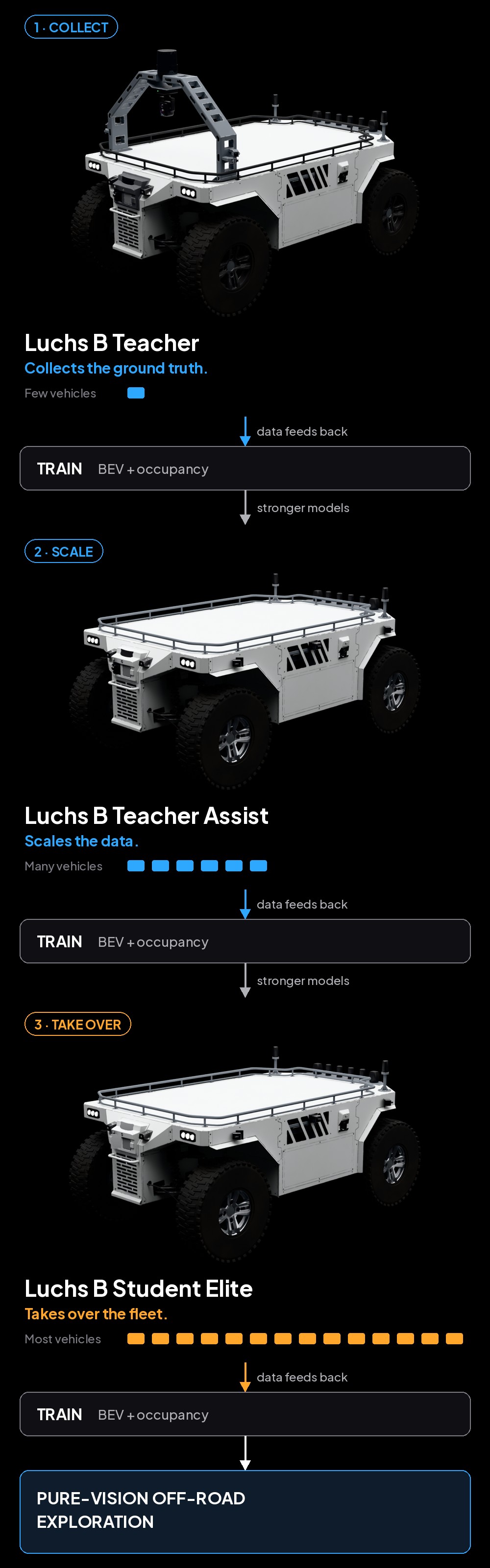
Three Vehicles, One Data Loop.
Each build has a job in the data pipeline. Luchs B Teacher collects camera data labelled with LiDAR depth, which trains stronger BEV (bird's-eye-view) and occupancy models. Teacher Assist vehicles then multiply the data, and Student Elite vehicles take over with cameras only. Their data feeds back into training too, until a camera-only fleet can explore the field on its own. Start with the gantry: Teacher ships in 6 weeks and collects the data first. Teacher Assist and Student Elite are deployed afterwards, step by step.
More vehicles, better models, fewer sensors.
Bare Chassis. Build Your Own.
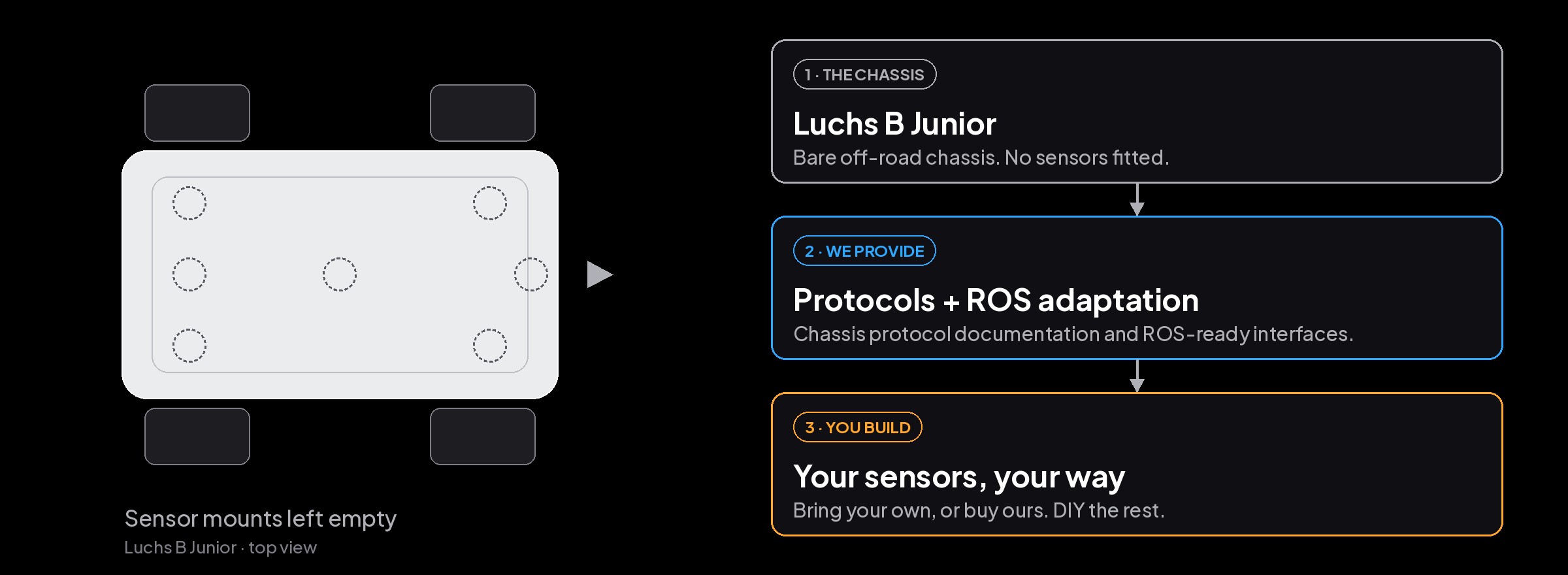
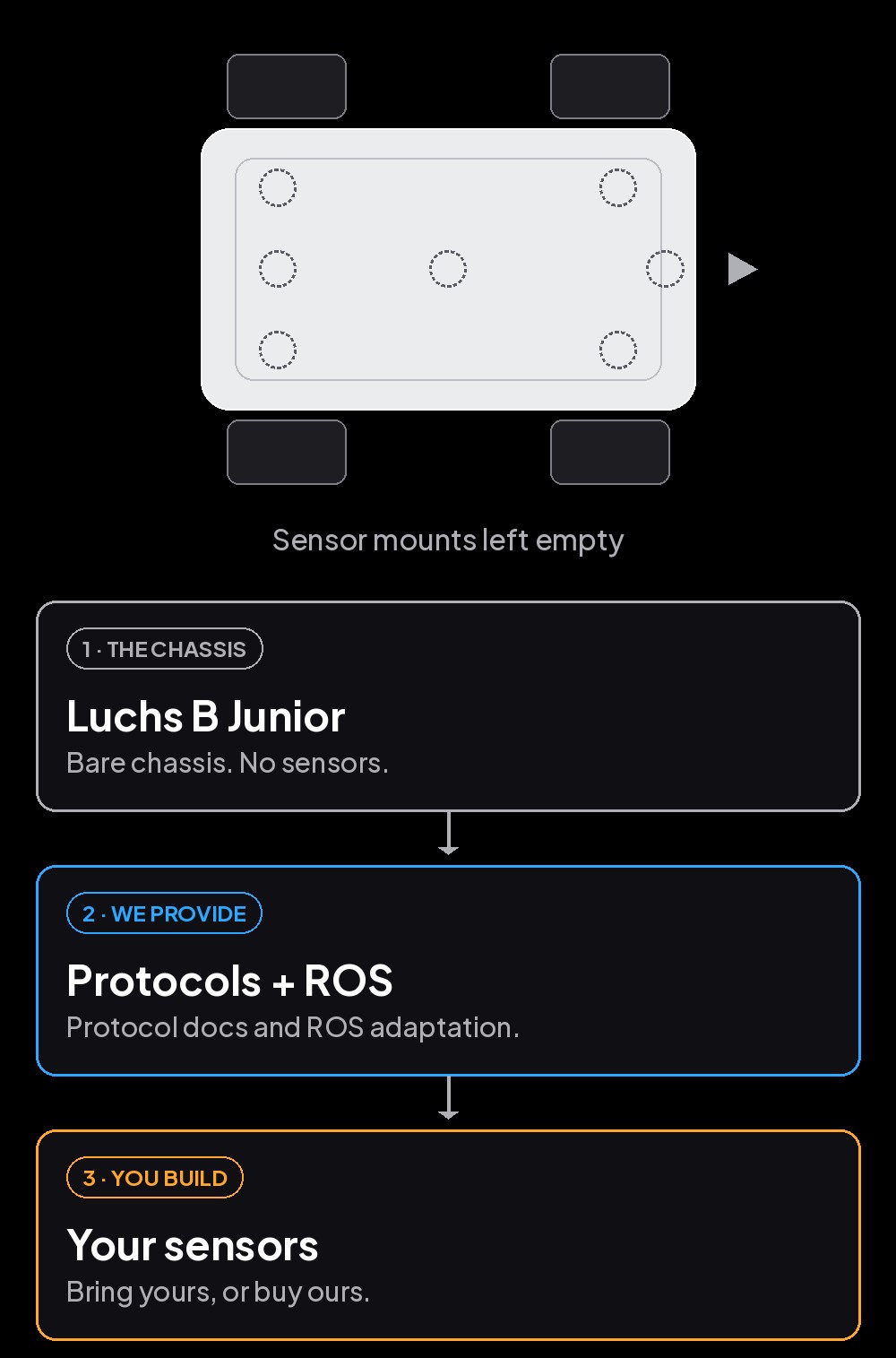
Luchs B Junior is the chassis only, with the sensor positions left empty. Fit sensors when you are ready, and buy them from us if you like. We provide the protocols and ROS adaptation, and you do the rest yourself. Lead time: 3 weeks.
Same chassis, your choice of sensors.
Where It Works.
Pipelines, vineyards, mines and forests: 5 to 10 vehicles per site, one fleet console, and every finding becomes a work order on your asset register.
One Vehicle, Or A Whole Fleet.
Vehicles link up in the field over mesh radio and report to a cloud platform on your own Aliyun or AWS account.
Technical Data
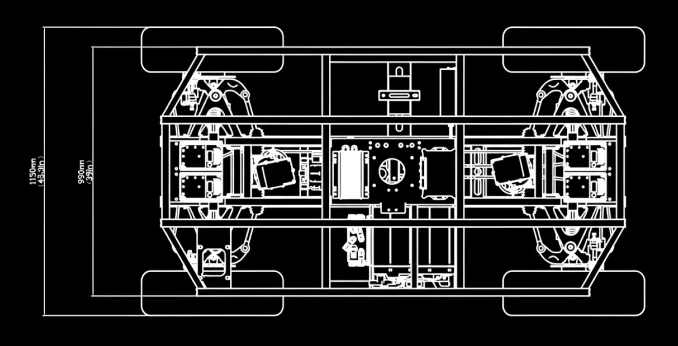
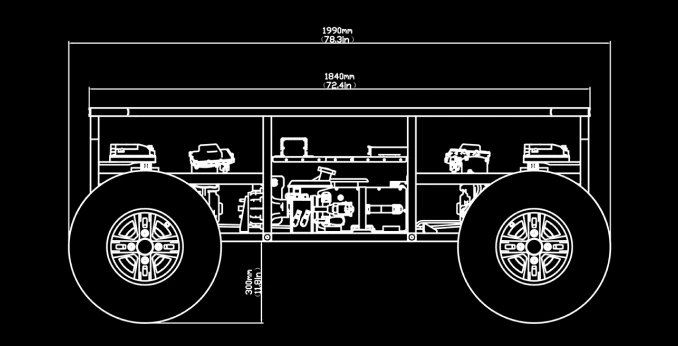
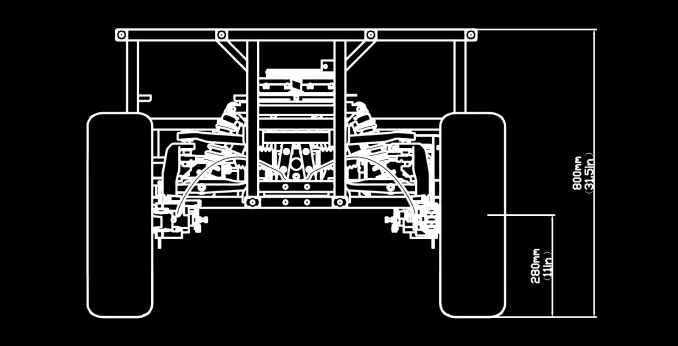
Currently displaying: Luchs B
Where Pavement Robots Stop.
Field footage on slopes and loose ground at full load, the terrain where pavement robots give up. Chassis by RJ Tech Limited, autonomy by TerraAgent Robotics: available as a bare chassis or as a complete autonomous vehicle.
Footage shows the previous-generation Luchs B chassis.
Black Or White. One Chassis.
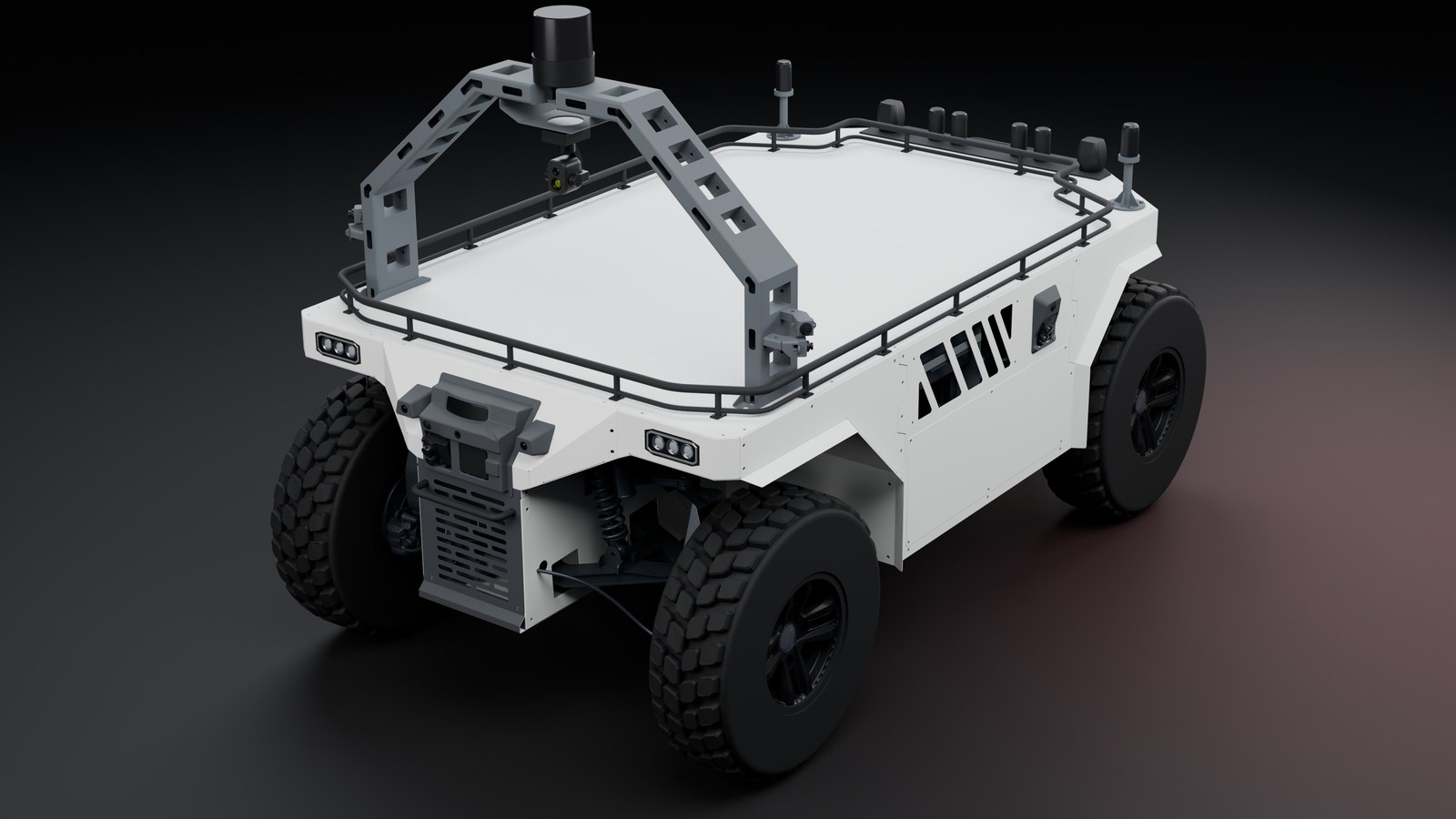
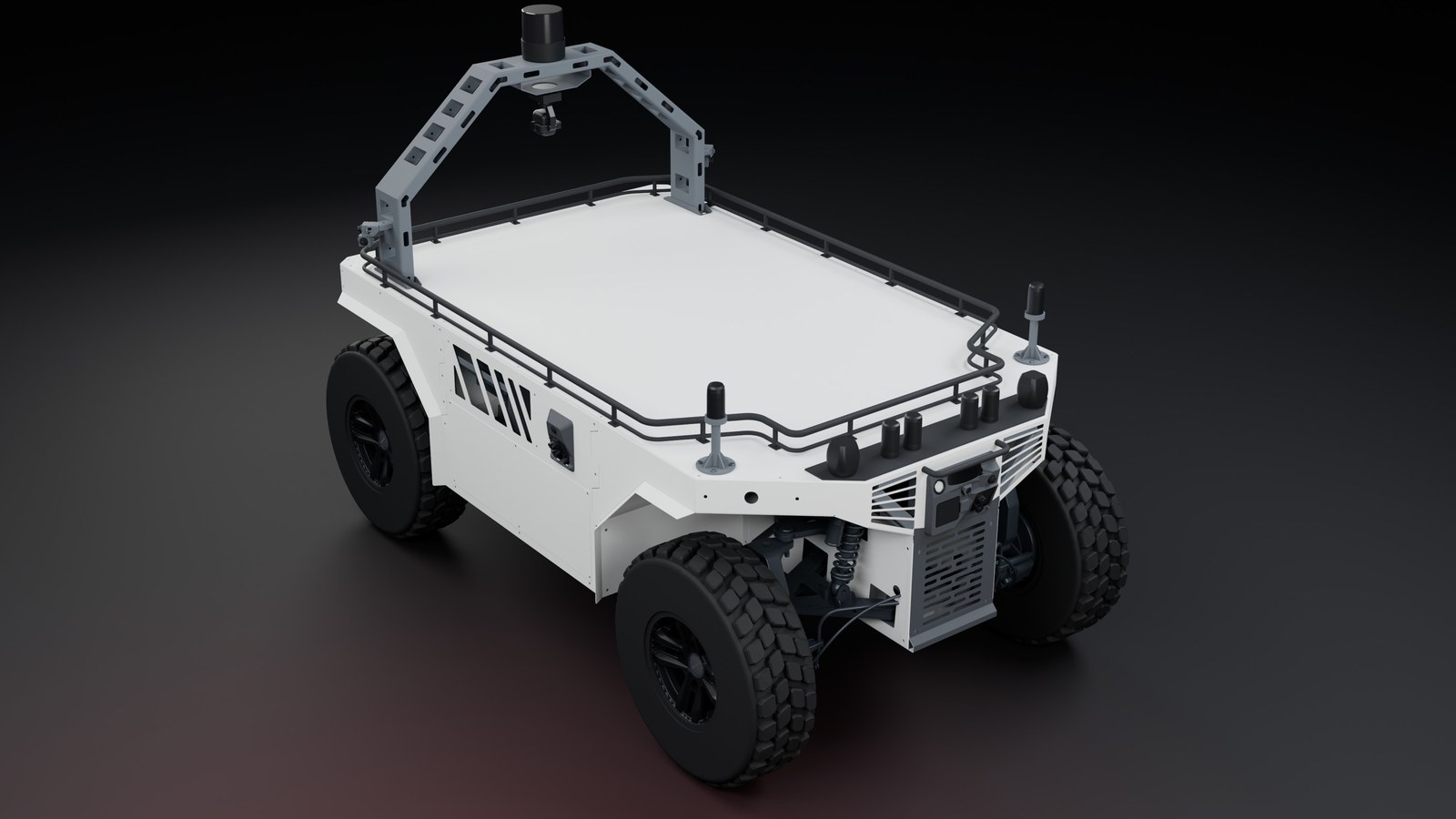
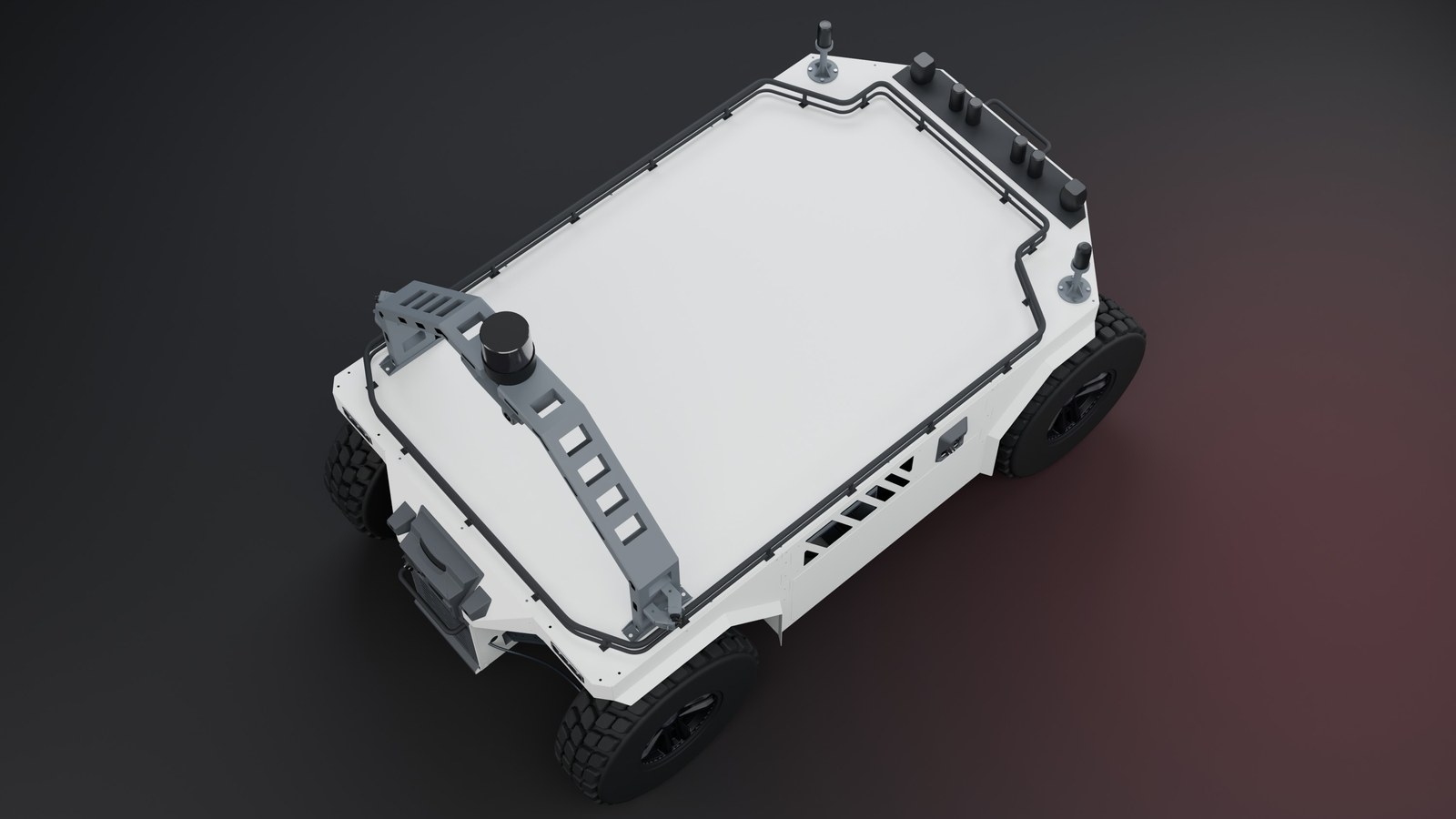
A flat deck over a welded frame, independent suspension at every corner and 22-inch off-road tyres. Black is the standard version. White is the cooling version, with a heat-protective coating that keeps the battery and electronics cooler under a hot sun. The first three views are renders of the TAR autonomy build with its sensor arch. Every view is the same chassis: order it bare, or as the TAR autonomy build.
The black and white photos show the previous-generation Luchs B chassis; the renders show the current model.
Request a Custom Quote
Our team will work with you to configure the perfect chassis for your autonomous vehicle application.
-
Features
-
Tech Spec
-
Packages
-
Gallery
-
Media
-
Documents
Access Technical Documents
· Technical White Paper – In-depth analysis of vehicle engineering and reliability
· Test Reports – Detailed performance and endurance test data
· Battery Specifications – Certified battery specs and compliance details
Please complete the form to the right, and our technical team will deliver the requested documents directly to your inbox.
DOWNLOAD NOW
-
First Name*
-
Last Name*
-
Email*
-
Name of Organization*
-
Country*
-
State/Prov*
-
Information Requested*
-
Please register for email subscriptions about RJTech and the latest developments (you can unsubscribe at any time).YesNoClick here for our privacy policy.