English
 العربية
 Deutsch
 Français
 Español
 简体中文
CUSTOMIZED OFF-ROAD PRODUCTS
From bare chassis to self-driving vehicle.
You bring the job — a terrain, a payload or a vehicle you already own. We build the missing layers, one at a time or all together.
01 4×4 · 6×6 · 8×8 chassis
02 Electric & drive-by-wire conversion
03 Domain controller & VCU
04 Autonomy payload
ONE STACK, FOUR WAYS IN
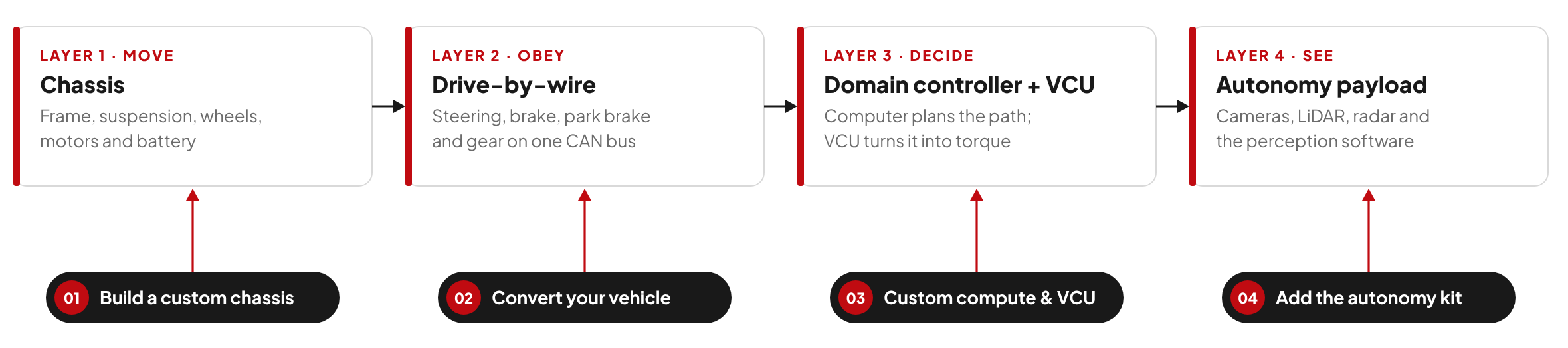
Every autonomous off-road machine is the same four layers. Start at the one you are missing.
Chassis that moves, actuators a computer can command, a brain that decides, and sensors that see. We design each layer to plug into the next — so a project can start with a bare chassis and end as a working autonomous vehicle, without changing suppliers halfway.
01
CUSTOM CHASSIS
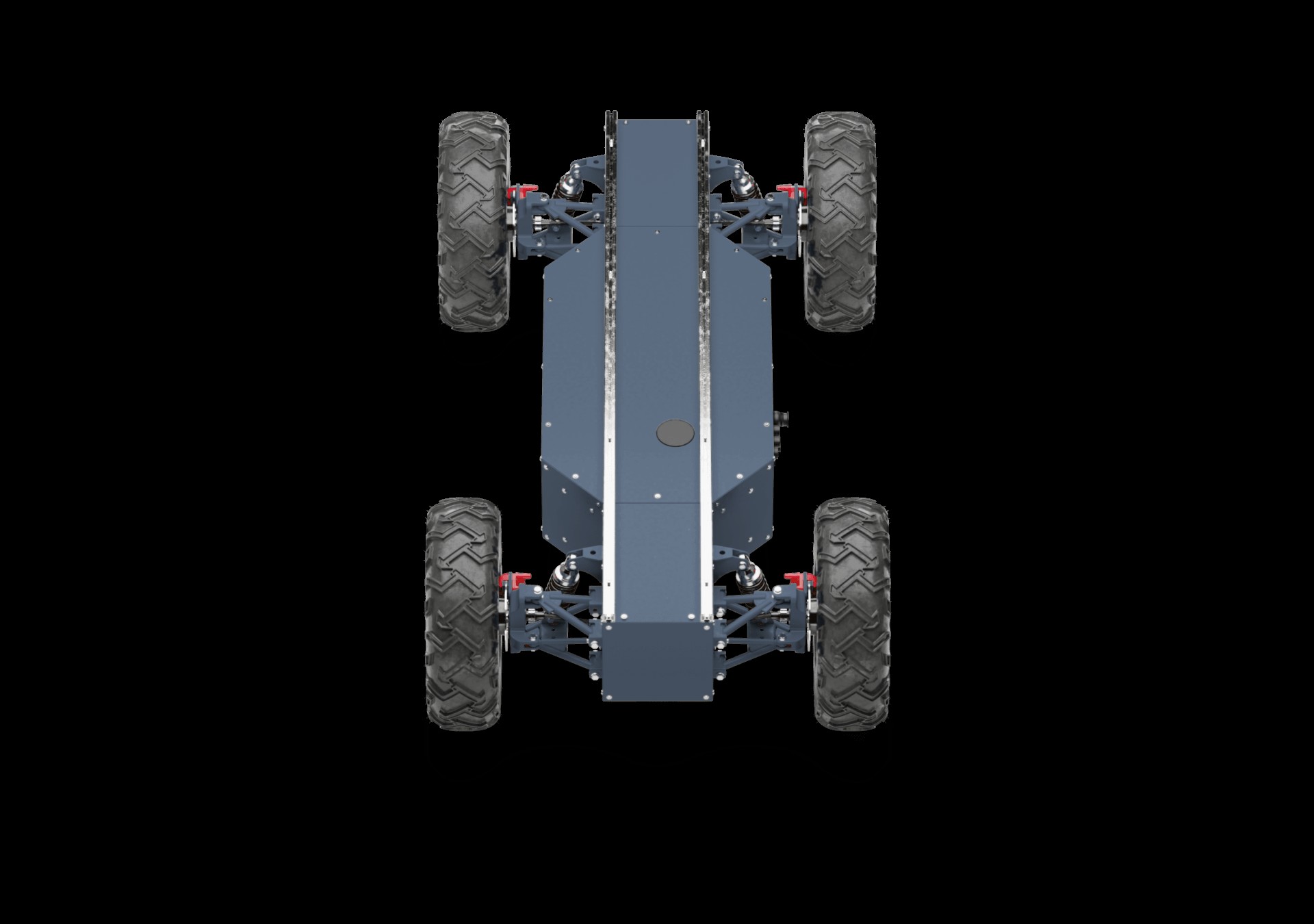
4×4, 6×6, 8×8 — the axle count follows the job.
Every chassis we build is independent-drive and fully drive-by-wire: each wheel has its own motor, steering and braking are electronic, and the whole vehicle is commanded over an open CAN protocol. Need more payload or softer ground pressure? Add an axle, not a new vehicle.
OUR OWN BUILD
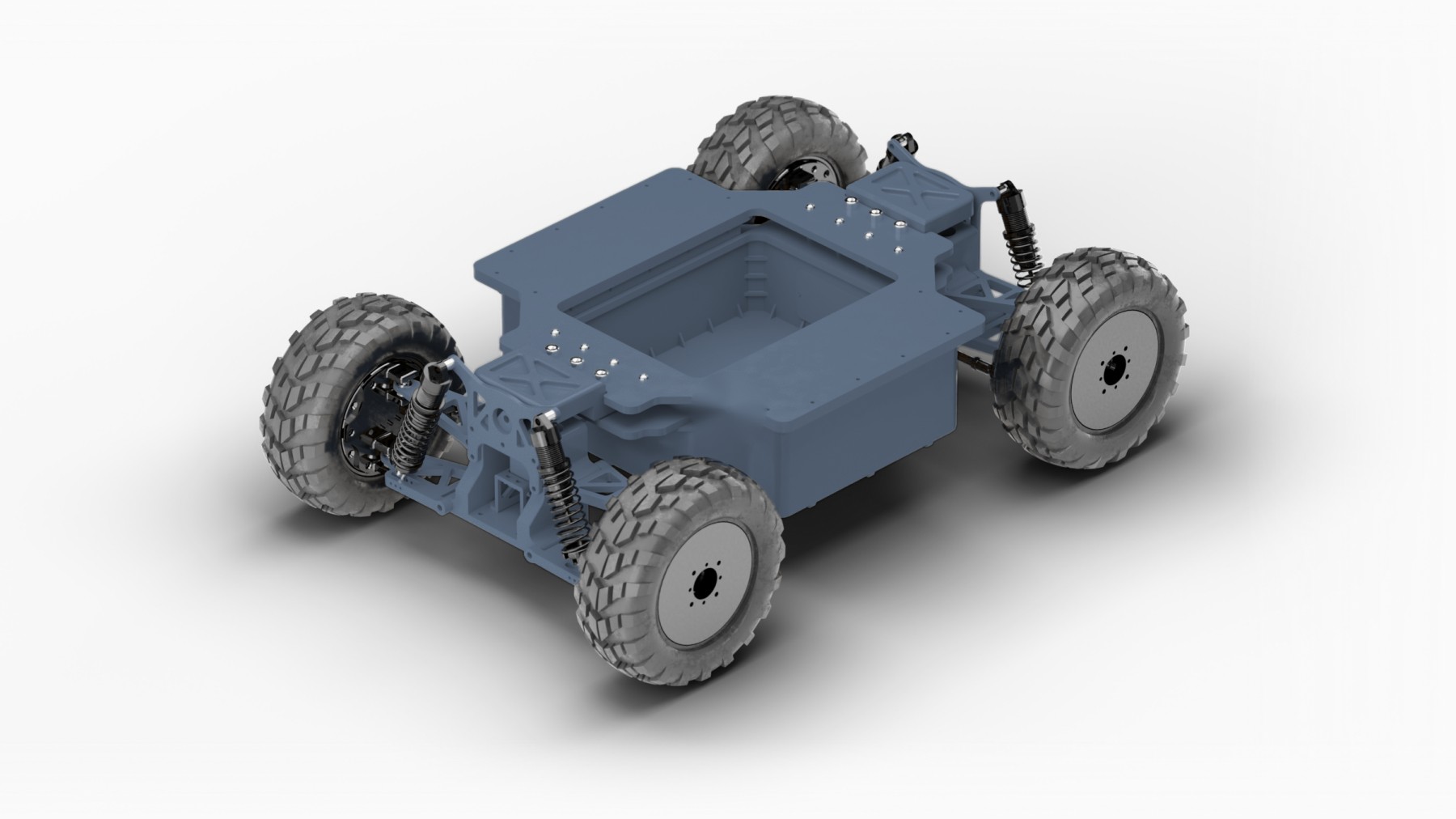
Example 1 — 4×4 drive-by-wire chassis
Four hub motors, front and rear axle steering, independent suspension. The workhorse for inspection, farm and site logistics.
250 kg payload
4 × 3.5 kW peak hub-motor power
60 km/h top speed
1990 × 1150 × 560 mm L × W × H
OUR OWN BUILD
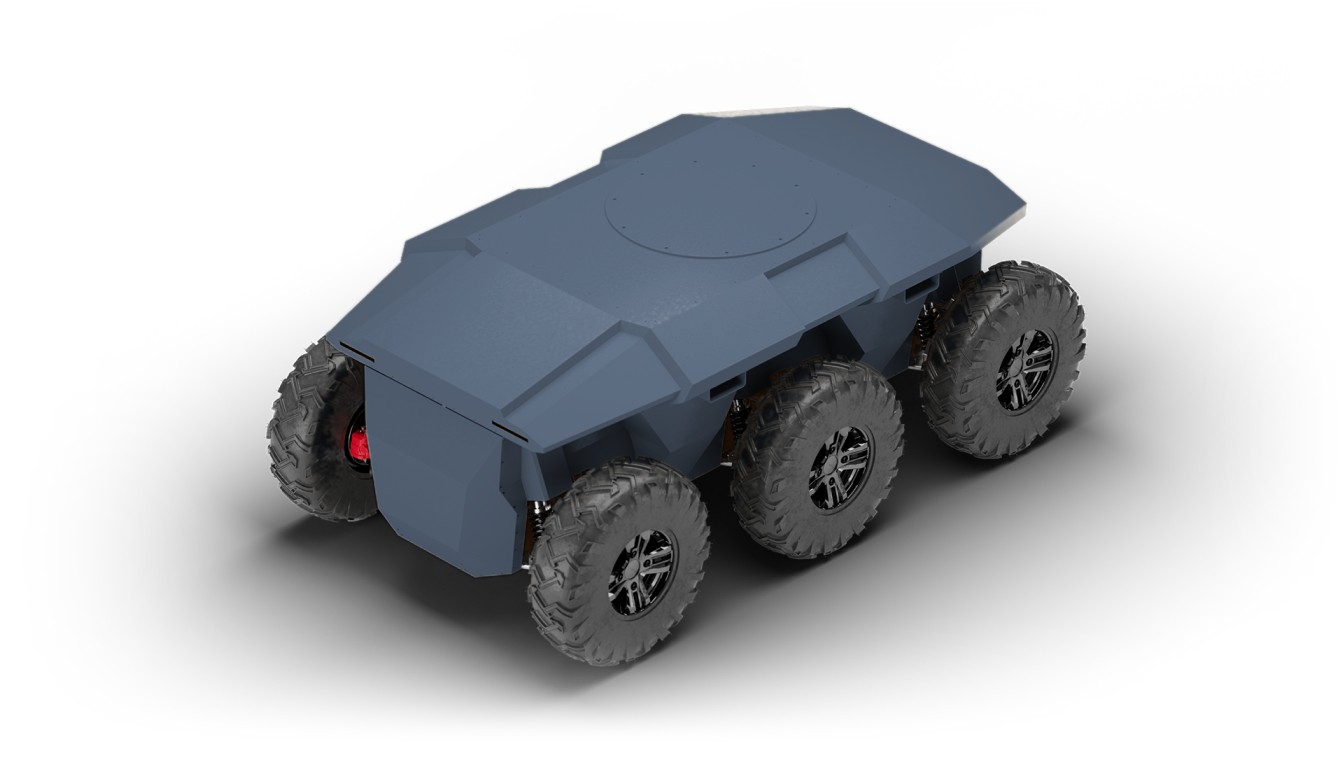
Example 2 — 6×6 drive-by-wire chassis
Six-wheel distributed drive for sand, mud and heavy loads, with our self-developed range extender for long missions.
400 kg payload
6 × 15 kW peak drive power
6 × 560 N·m peak wheel torque
2500 × 1500 × 1100 mm L × W × H
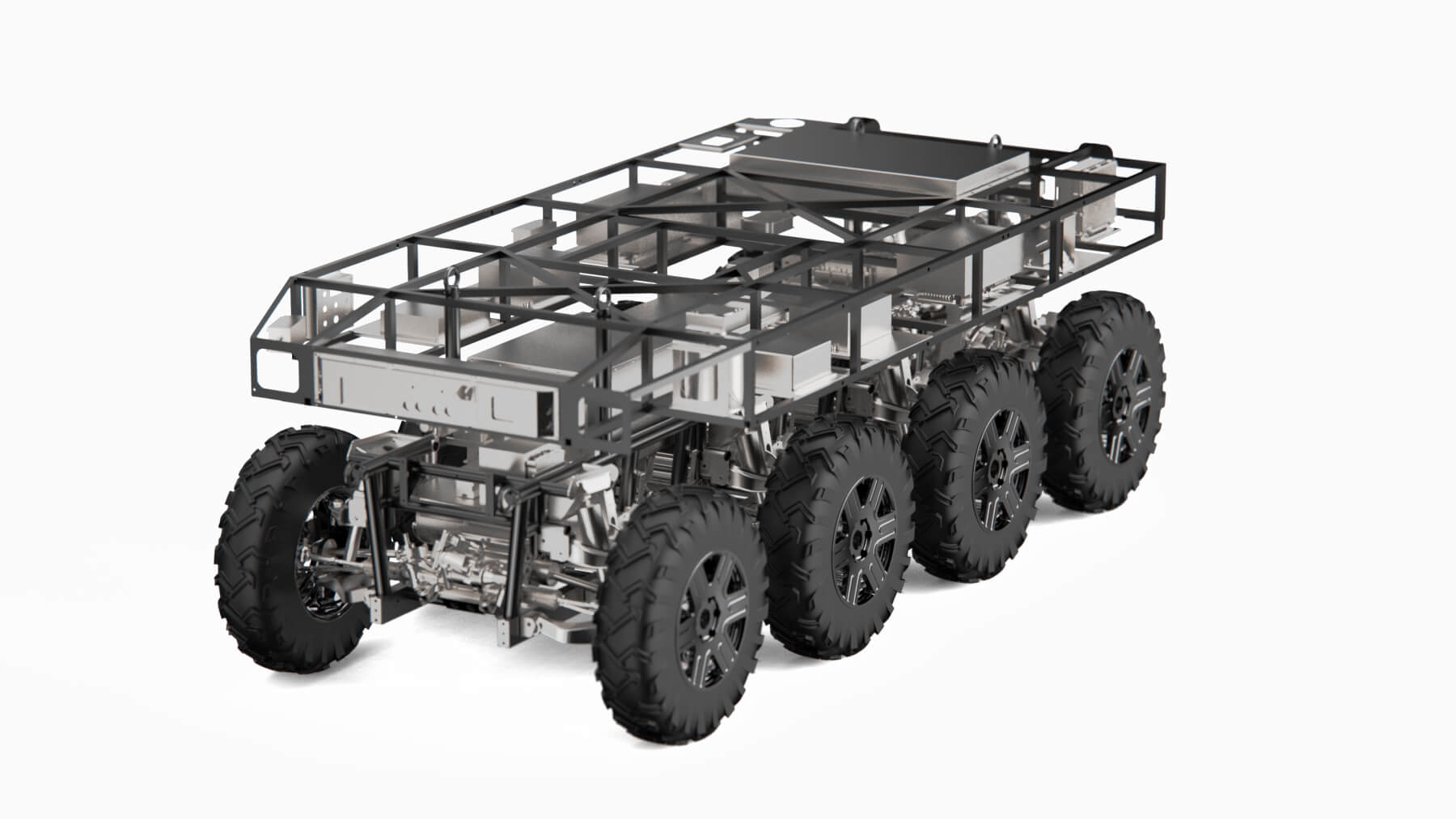
Same corner module. More corners.
The 6×6 is not a new vehicle — it is the 4×4's drive, steering and braking modules repeated on a longer frame. The vehicle controller simply recognises the extra axle. The same logic takes us to 8×8: up to 800 kg payload on 8 × 60 kW drive.
— One part number, many vehicles — the same axle module serves 4×4, 6×6 and 8×8, so spares, tooling and training are shared.
— Engineering, not redesign — we re-check power, cooling and braking for the longer vehicle; the building blocks stay proven.
— Honest trade-off — each extra axle adds weight and cost; we recommend it where the ground is soft or the load is heavy, not by default.
Prefer to start from a catalogue platform?
Our Luchs family covers the most common sizes and can be customised the same way.
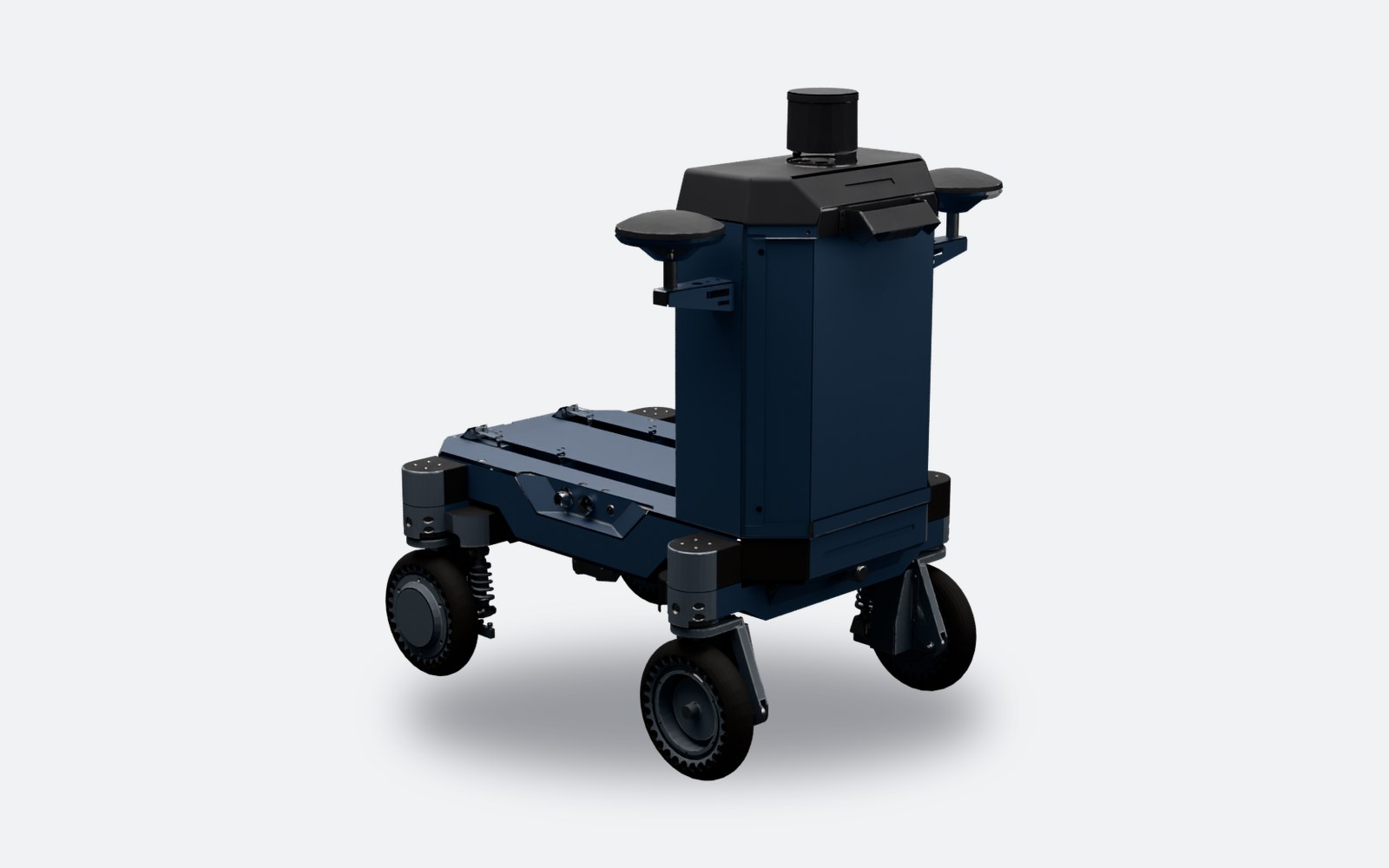
RENDER
Luchs A — compact 4WS chassis
Four-wheel steering in a footprint that fits through a door.
100 kg payload
4WS front & rear steering
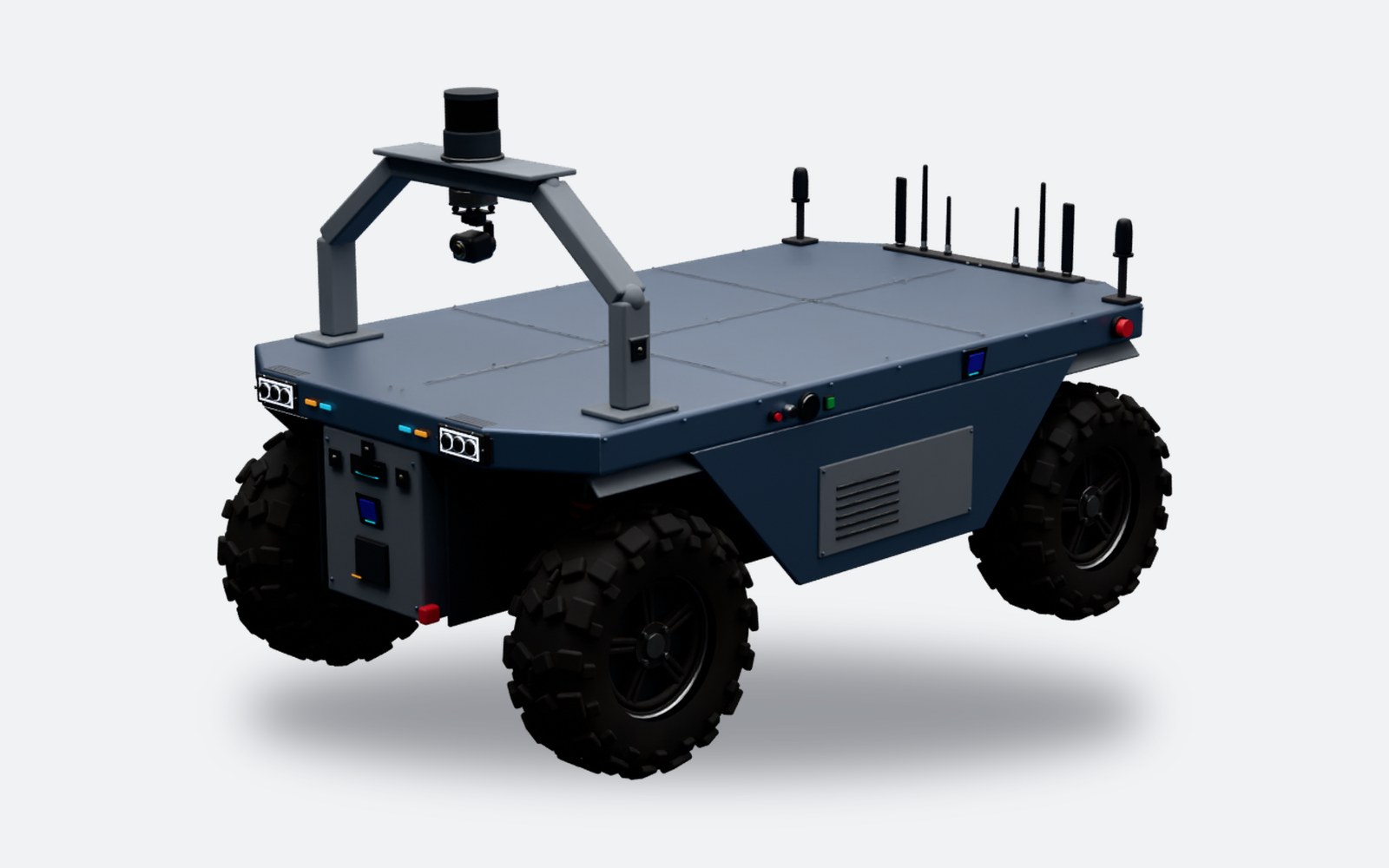
RENDER
Luchs B — 250 kg off-road chassis
Four in-wheel motors, dual electric steering, built-in range extender option.
250 kg max payload
40 km/h top speed
02
ELECTRIFICATION & DRIVE-BY-WIRE
Already have a vehicle? We make it electric — and make it listen to a computer.
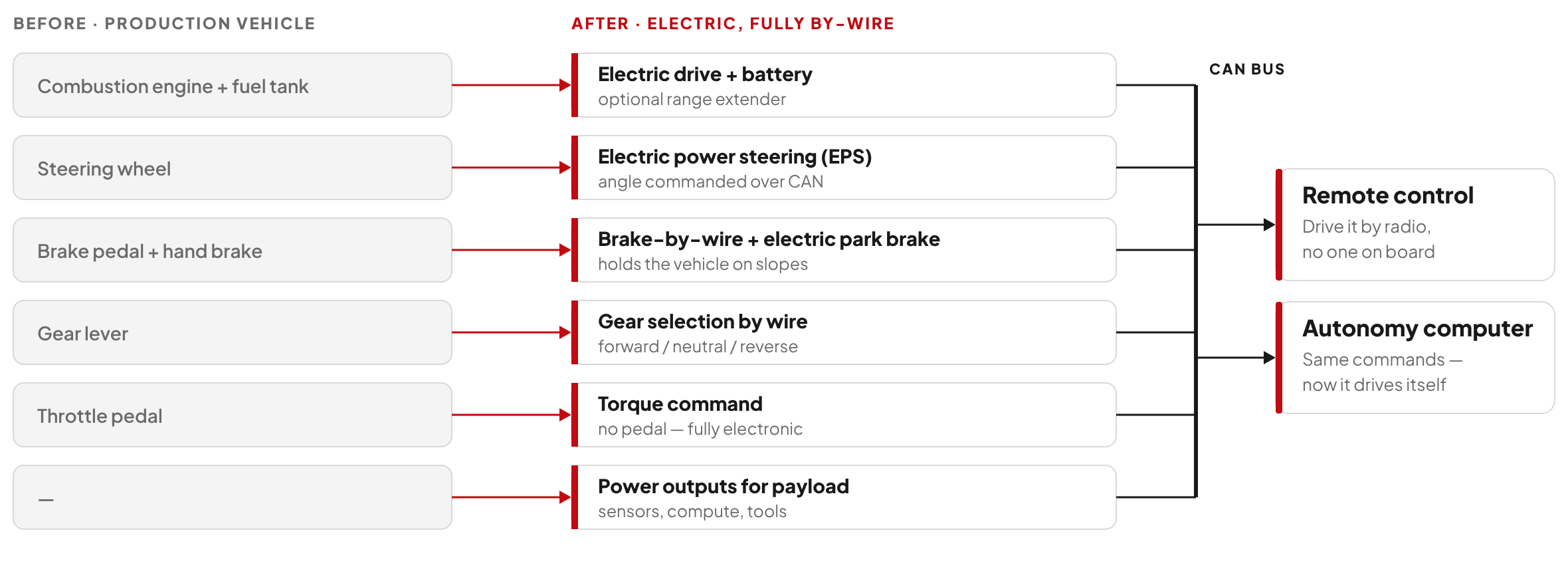
Take a production car, ATV or side-by-side UTV. We replace the engine with an electric drive, and replace pedals, steering wheel and gear lever with actuators on one CAN bus. The result drives like the original — but a remote, or an autonomy computer, can now drive it.
PROOF, NOT PROMISE
We took a classic Porsche 911 — and rebuilt it as an electric, drive-by-wire car.
— Stripped — engine, fuel system, exhaust and gearbox out.
— Electrified — high-voltage battery and four motors, one per wheel.
— By wire — every driver input became an electrical signal a computer can send.
— Our own controller — our own VCU decides the torque at each wheel.
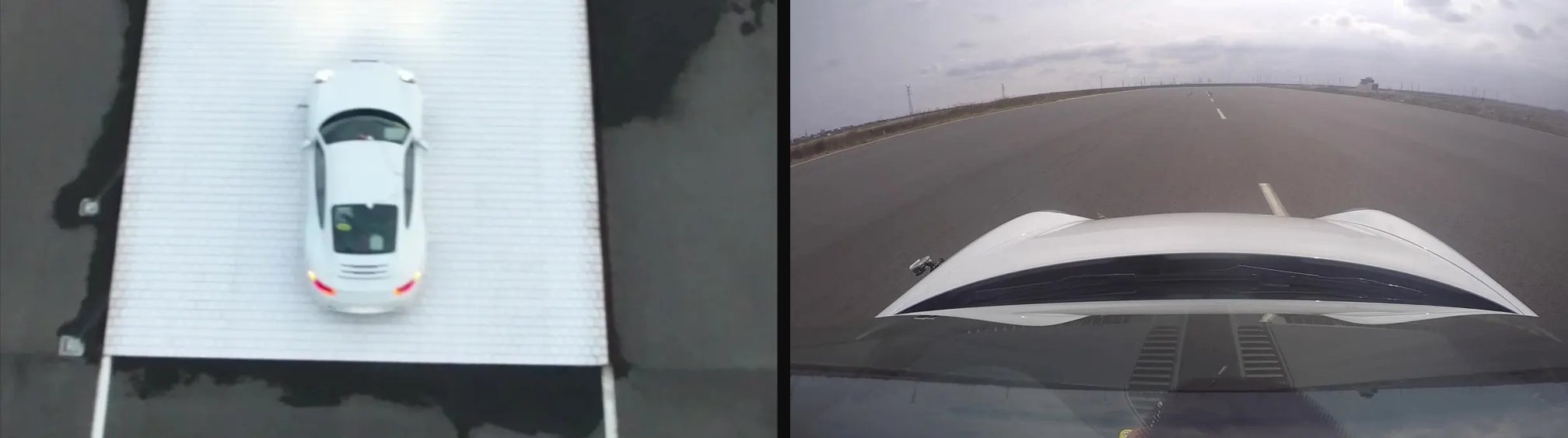
Real test footage — launch on a split-grip surface · high-speed avoidance, steering by torque alone
If we can do it to a 911, we can do it to an ATV, a side-by-side or a work vehicle. The recipe is always the same:

WE BUILD OUR OWN
Electric drive is our home turf
We design and manufacture our own electric ATVs, including a road-certified L7e model. Conversion projects reuse the same motors, batteries and controls.
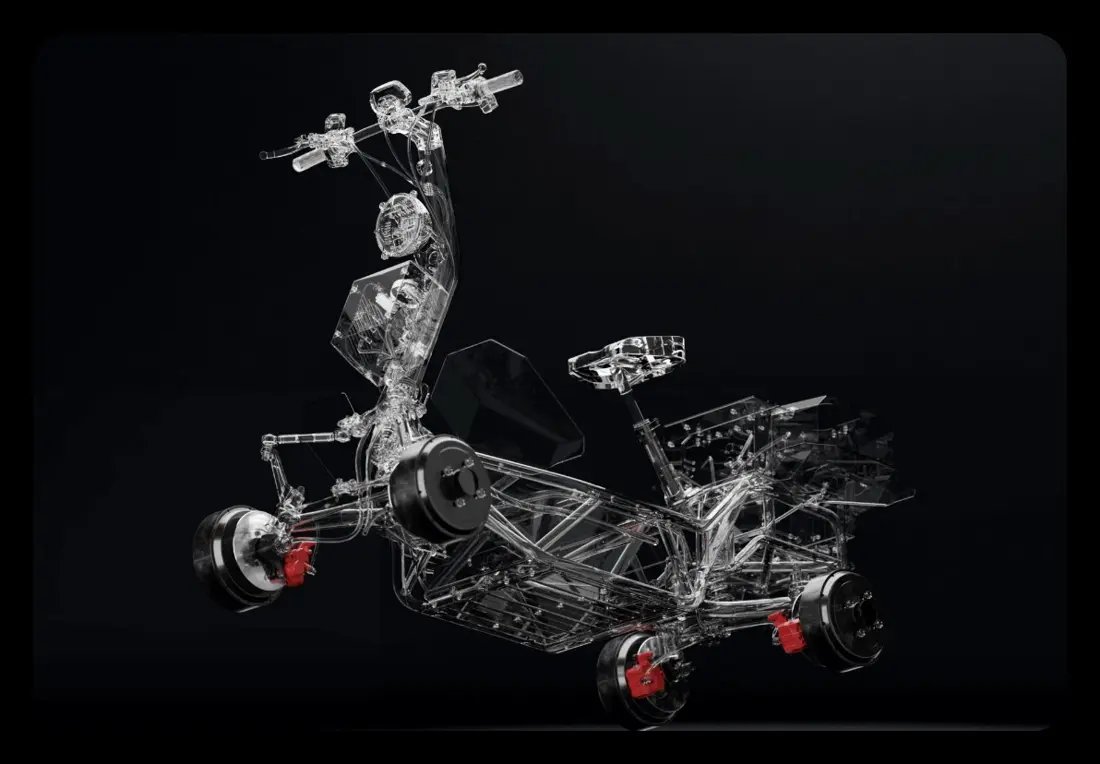
DISTRIBUTED DRIVE
One motor per wheel, when it matters
From a single central motor to independent hub motors — chosen for the terrain, budget and how much control the autonomy stack needs.
INSIDE A CONVERSION
A production side-by-side, turned into a driverless work platform.
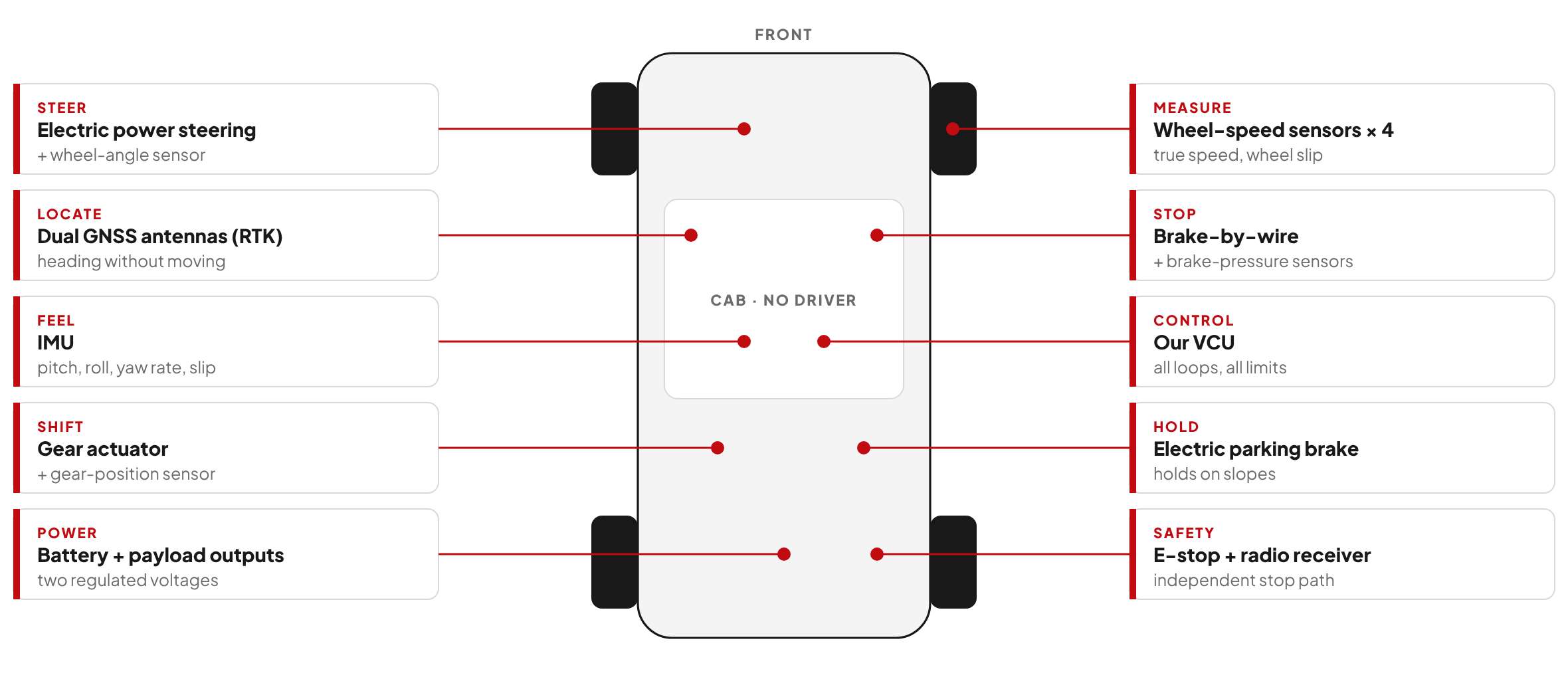
No driver seat, no pedals, no steering wheel. Below is exactly what goes onto the vehicle, and how our software drives it.
ROUTE A · KEEP THE ENGINE
By-wire retrofit
Actuators on steering, brake, park brake and shifter; the engine stays. Fast to deliver — but an engine reacts slowly and unevenly to the throttle, so low-speed control takes more tuning.
ROUTE B · GO ELECTRIC
Electric conversion, by-wire built in
Engine out, one or two electric motors in. The computer commands torque directly — instant, linear, silent. Better control, and often cheaper than a purpose-built electric vehicle.
1 · What we fit — sensors and actuators
2 · How we build it
1
Tear-down & 3D scan
Measure the vehicle and scan the spaces where actuators will go.
2
Decode the CAN bus
Read what the original vehicle already reports — speed, gear, faults.
3
Fit actuators & VCU
Steering, brake, park brake, shifter and our controller, on our own brackets and harness.
4
Identify the vehicle
Step tests on steering, throttle and brake to measure delays, dead-bands and limits.
5
Tune & test
Creep, hill start, emergency stop, path tracking — on our test ground before shipping.
3 · How the software drives it — PID, MPC and learning
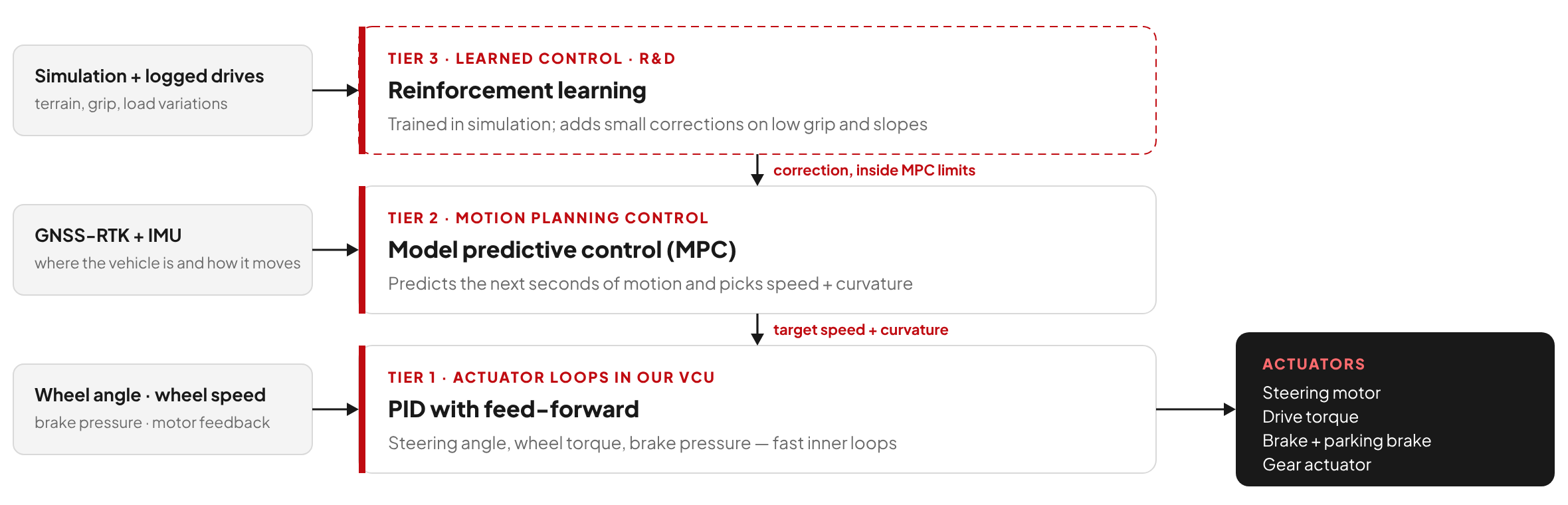
TIER 1 · PID
The reflexes
Fast loops in our VCU hold each actuator where it is told: steering angle from the wheel-angle sensor, wheel torque from wheel speed, brake force from brake pressure. A feed-forward term does most of the work; PID corrects the rest, with gains scheduled by speed and load.
TIER 2 · MPC
Looking ahead
A vehicle model predicts the next seconds of motion. Every cycle, MPC picks the speed and curvature that stay on the path while respecting limits — steering rate, acceleration, slope, grip. It plans the corner before the vehicle reaches it.
TIER 3 · RL · R&D
Learning the terrain
Controllers trained with reinforcement learning in simulation, on thousands of grip, slope and load variations. They add small corrections on mud, sand and snow — always inside the limits MPC sets, never in place of them.
03
DOMAIN CONTROLLER & VCU
The brain and the spinal cord — sized for your vehicle.
The domain controller thinks: it runs perception and planning. The VCU acts: it turns a target speed and curve into torque, steering angle and braking on every wheel. We customise both, and keep them separate so the safety-critical part stays simple.
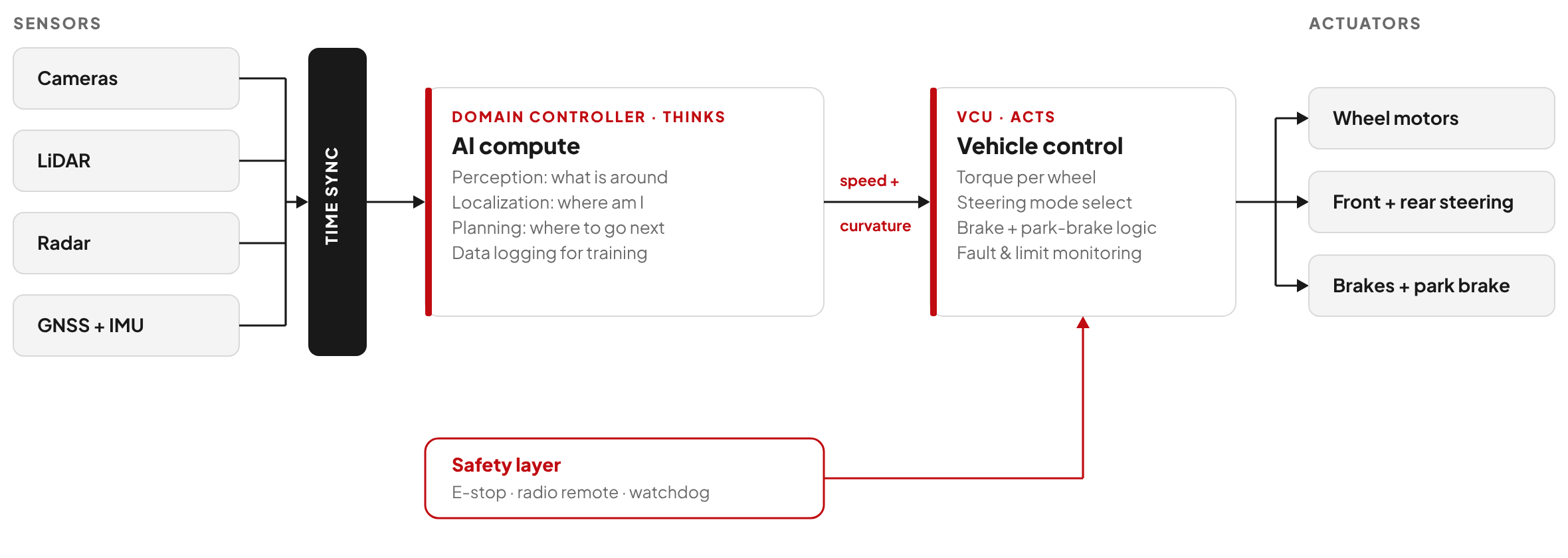

— Compute that fits the task — from compact entry-level AI boxes to ~700 TOPS-class units for multi-camera, multi-LiDAR vehicles; sealed, vehicle-grade housings.
— Upgrade without rebuilding — the compute sits on a standard mount and harness, so a fleet can move to a newer controller without touching the chassis.
— Our own VCU — per-wheel torque control for hub-motor chassis, single or dual Ackermann steering modes, park-brake logic.
04
AUTONOMY PAYLOAD
Sensors, compute and software in one kit — on our chassis or yours.
The autonomy payload bolts onto any of our platforms or onto a vehicle we have converted. Pick the sensor set by budget and task; the software stack is the same.
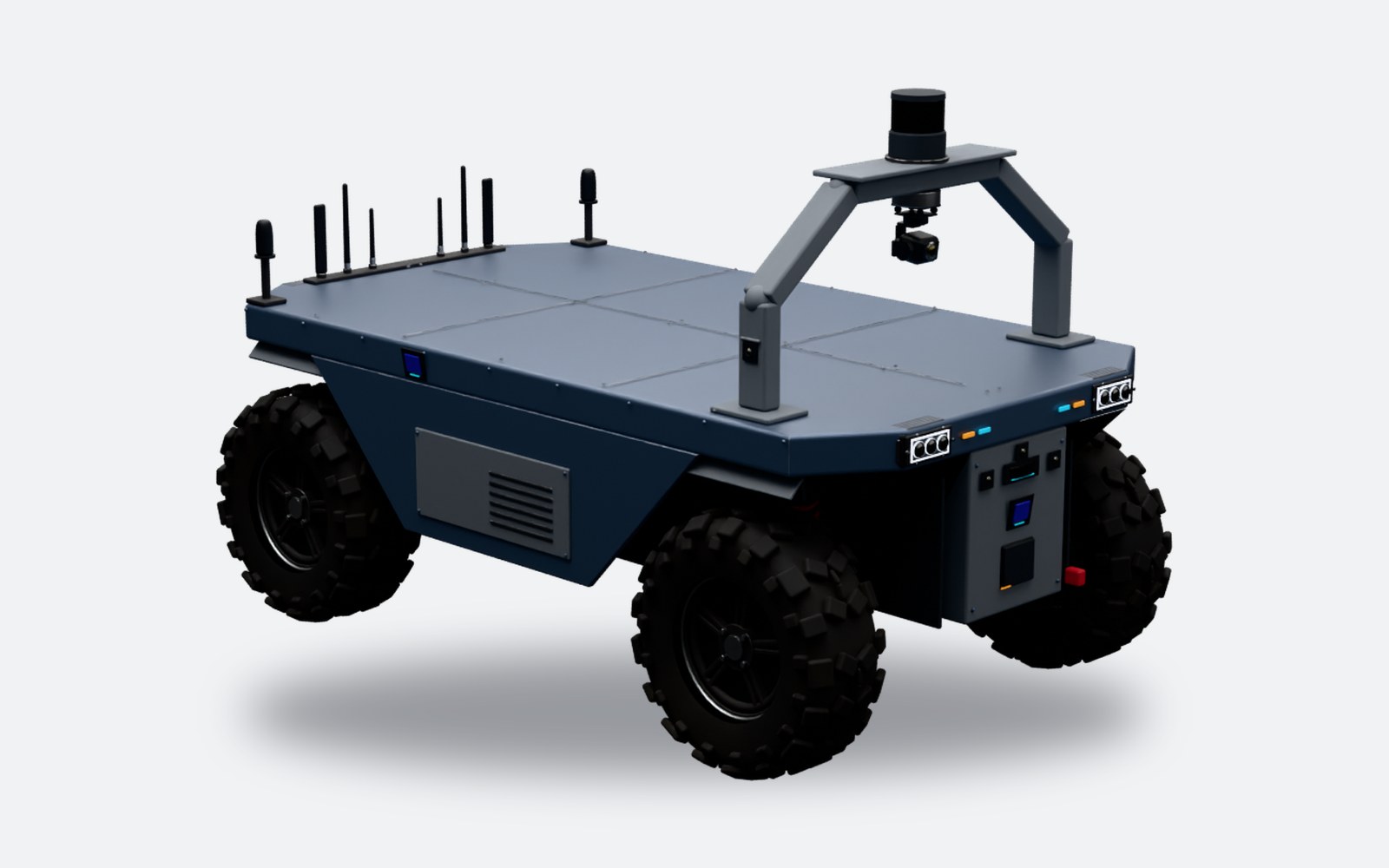
Three sensor modes, one software stack
MODE 1 · FULL 360°
Mast with 128-line LiDAR + solid-state LiDARs + cameras
Maximum range and coverage — for mapping and the hardest terrain.
MODE 2 · NO MAST
Solid-state LiDARs + cameras, 360°
Low profile, under branches and through barns.
MODE 3 · VISION
Cameras only, 360°
Lowest cost — and the ideal data-collection vehicle.
All modes keep one radar front and one rear as an independent safety backup.
What the software sees — semantic segmentation first
Off-road, a box around an object is not enough. Our perception labels every pixel and every 3D cell — track, grass, rock, water, vegetation, vehicle — so the planner knows not just where things are, but what it can drive on.
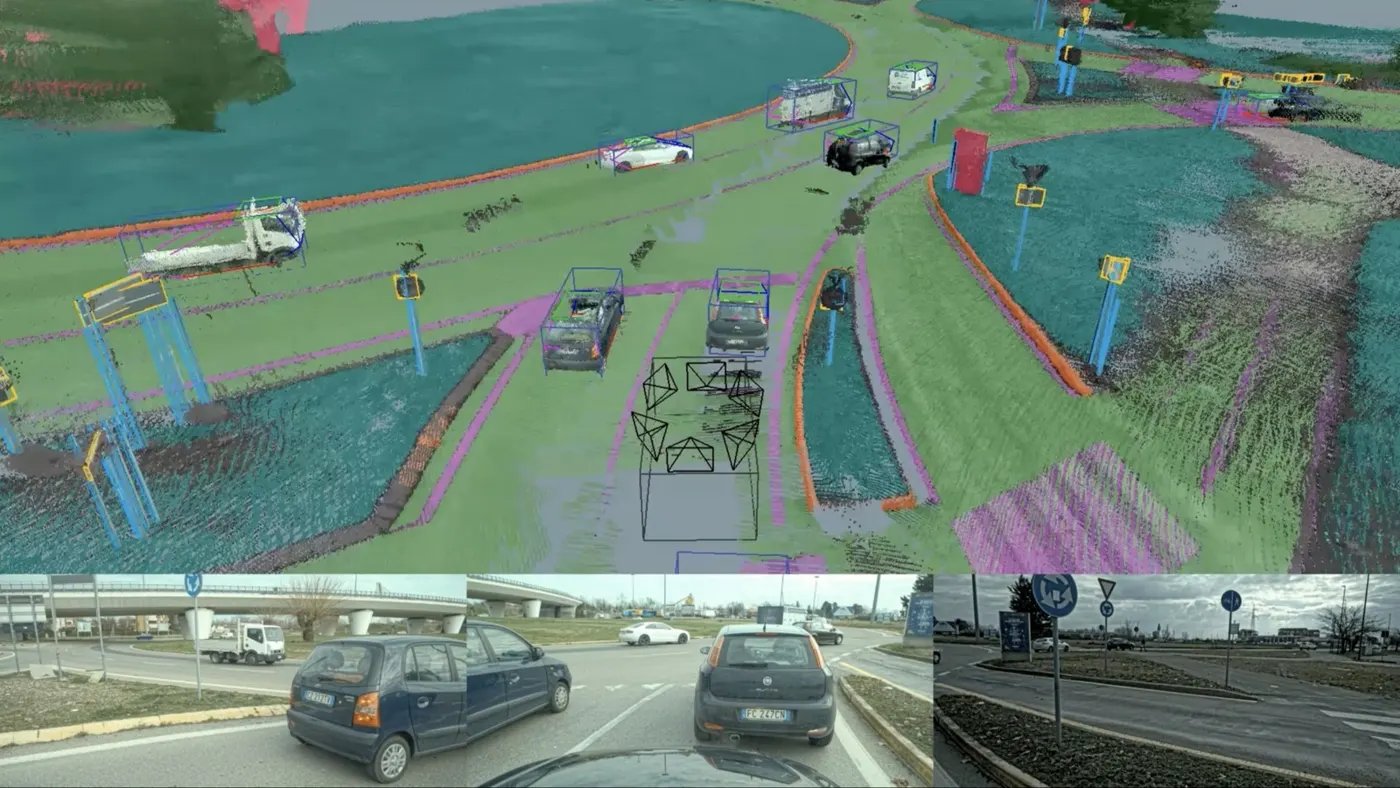
Semantic segmentation → bird's-eye view: road, verge, vegetation, vehicles, poles — every pixel labelled
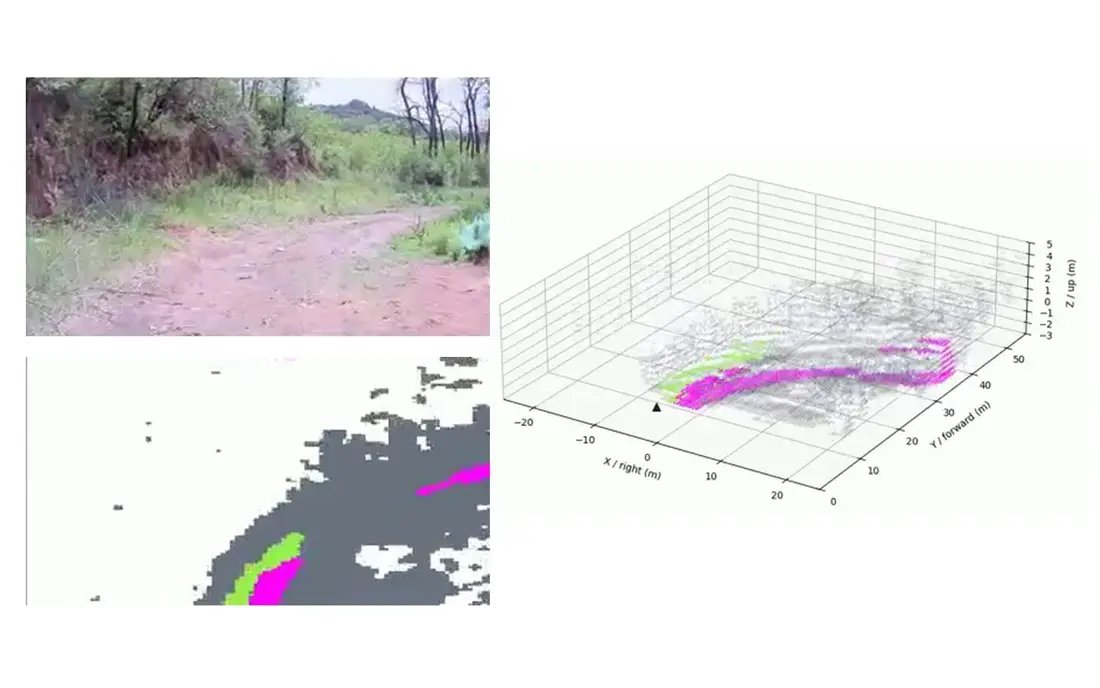
Semantic occupancy — dirt trail
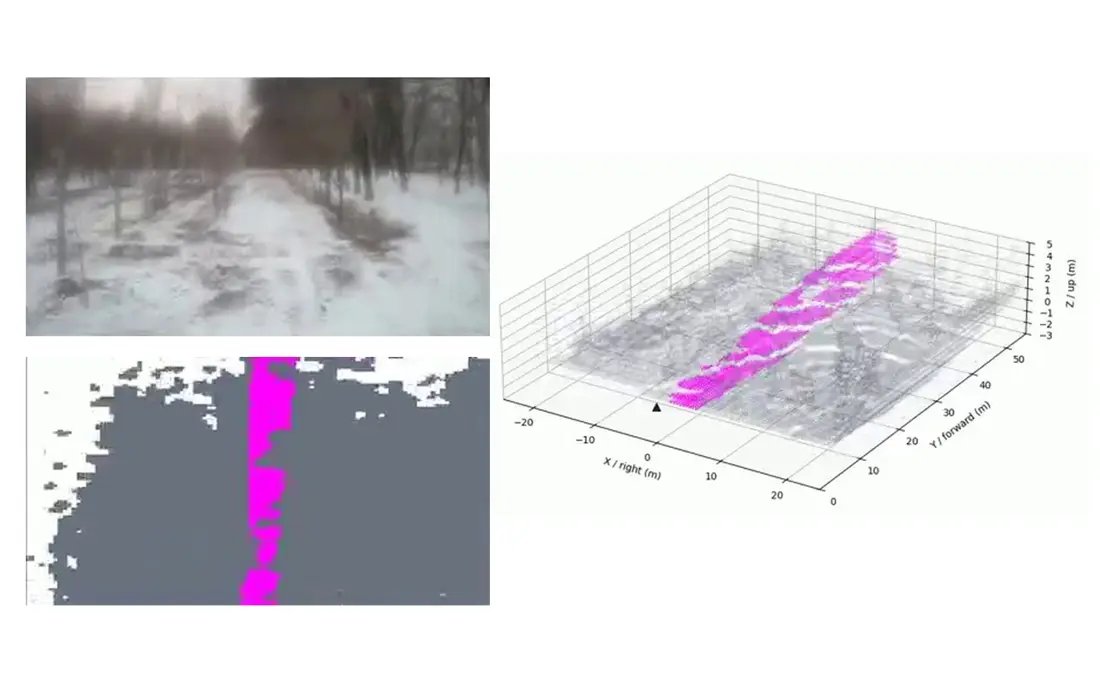
Semantic occupancy — snow
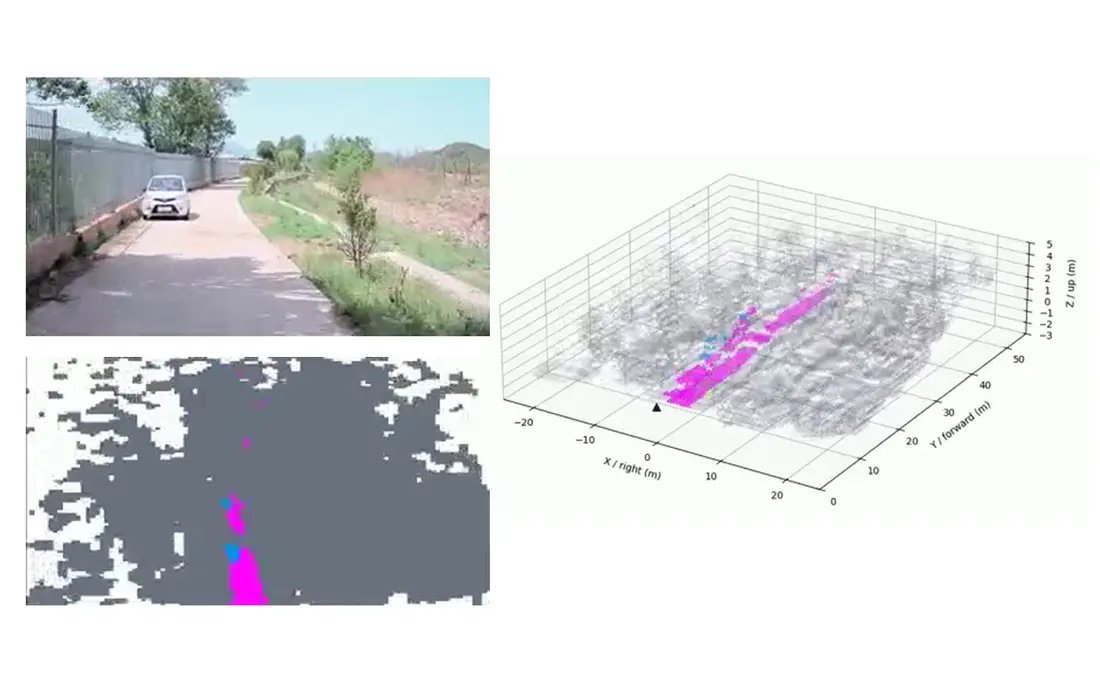
Drivable area with an oncoming vehicle
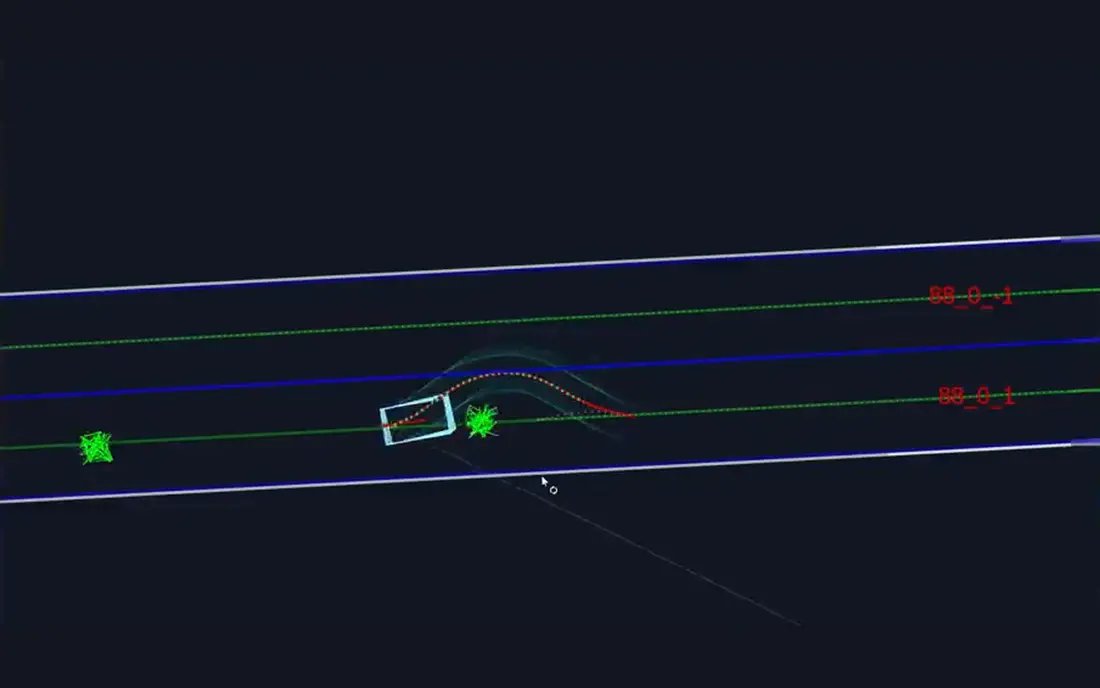
Planning around the obstacle
Development footage and algorithm output, recorded on test vehicles carrying the same payload.
Built for: forest & grassland inspection · agriculture · desert & pipeline inspection · high-value asset patrol · firefighting support · physical-AI data collection
HOW A CUSTOM PROJECT RUNS
Clear steps. No surprises.
1
Requirement
Terrain, payload, speed, range and where it must operate. We turn it into one page you sign off.
2
Concept & quote
Layout, chosen platform and layers. Engineering fee and unit price shown separately.
3
Prototype & test
First vehicle built and tested on our sites before it ships.
4
Delivery & support
Small-batch production, documentation, spares and remote support.
START A PROJECT
Tell us the job.
We'll build the vehicle.
Chassis only, a conversion, a compute upgrade or the complete autonomous vehicle — send us the requirement and we'll come back with a concept.